Morocco rewards eating slowly. The cooking is built on preserved lemon, olives, cumin and slow heat, and the best meals are the ones that took all day — a Friday couscous, a tanjia left in the embers of a hammam furnace, a tagine that never boiled. These are the dishes worth planning a day around.
Tap any photo to open it full-screen and order a print.
01 / 08
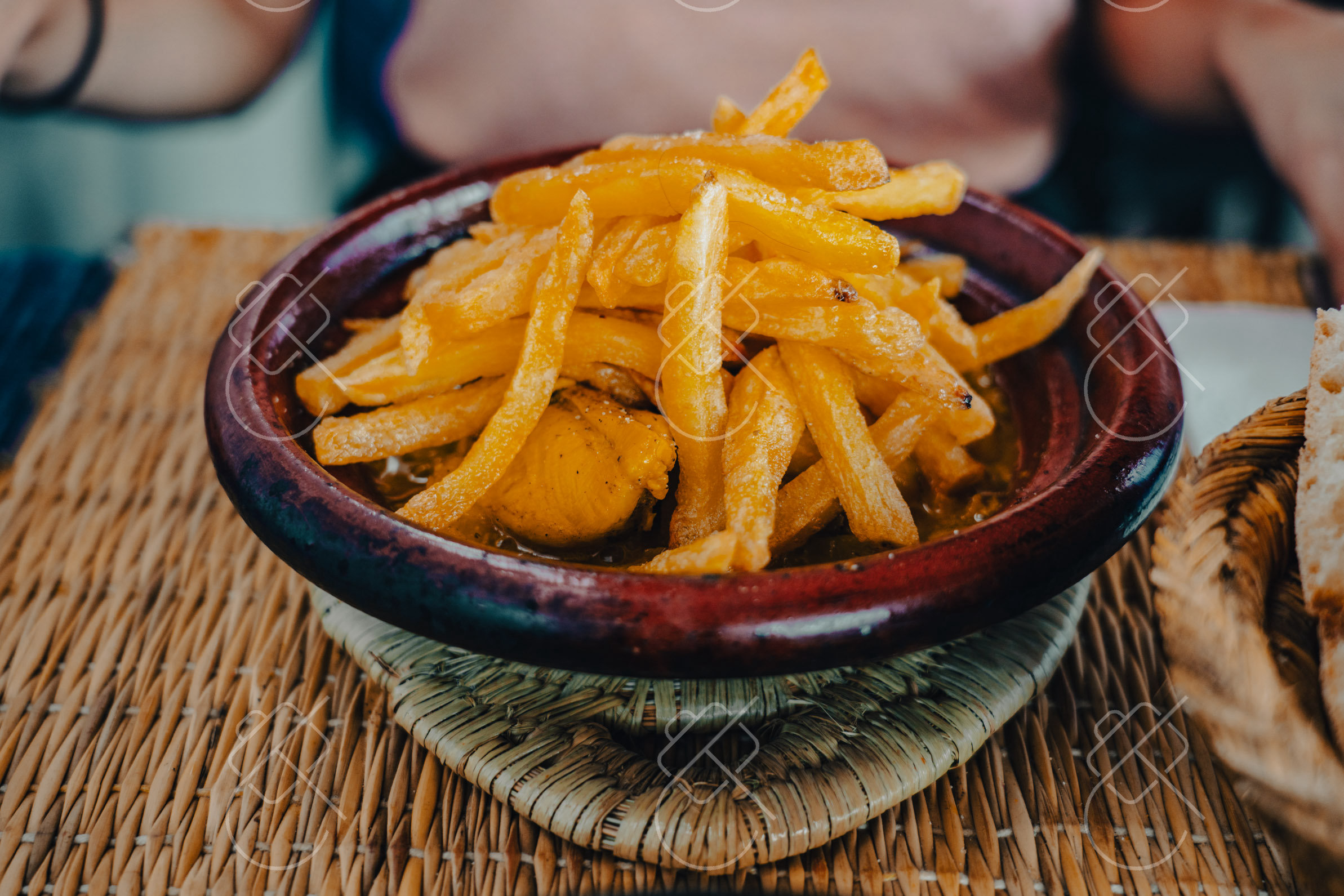
Chicken Tagine with Preserved Lemon
The dish everyone knows, and it earns it: chicken cooked low with preserved lemon, green olives and saffron until the sauce is thick enough to eat with bread.
The cone-shaped tagine lid is a still: steam rises, condenses on the inside and runs back down, so the meat braises in its own liquid without drying. The preserved lemons — salt-cured for weeks — are the part visitors underestimate. They give a sour, floral edge that fresh lemon cannot.
02 / 08
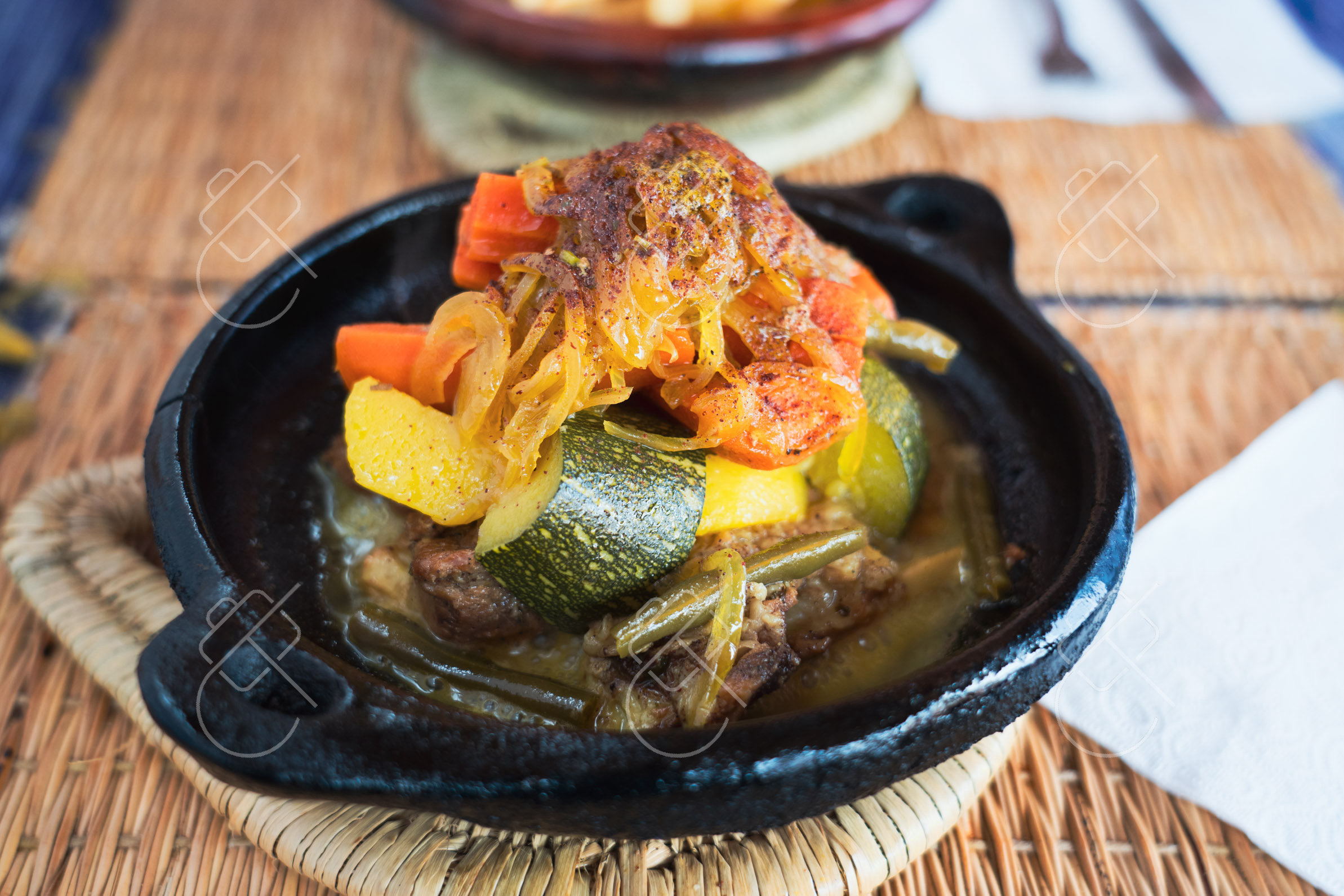
Friday Couscous
Couscous is a Friday lunch, not an everyday side. Families sit down to it after prayers, and restaurants that serve it other days are serving something else.
The grain is steamed three or four times over the broth, not simply soaked, and each steaming is followed by rubbing the grains apart by hand. That is why it arrives light and separate rather than clumped. The vegetables are arranged on top in a mound with the meat buried underneath.
03 / 08
Harira
A tomato, lentil and chickpea soup thickened with flour and served with dates. In Ramadan it is what breaks the fast, and it appears everywhere in the evening.
The flour slurry added at the end is what gives harira its body; without it the soup is thin. It is often finished with a squeeze of lemon and a spoon of smen, the aged fermented butter that also goes into tagines.
04 / 08
B'stilla
Paper-thin pastry around pigeon or chicken with almonds, cinnamon and sugar. Sweet and savoury at once, and unlike anything else in the cuisine.
The pastry is warqa, made by dabbing wet dough onto a hot plate and peeling off a sheet thinner than filo. A good b'stilla has dozens of these layered. The cinnamon and sugar on top are not a dessert garnish — the dish has always been served sweet.
05 / 08
Msemen
Squares of layered flatbread, pan-fried and eaten at breakfast with honey and butter, or with cheese.
The dough is stretched until translucent, brushed with oil and folded on itself repeatedly, which creates the flaky layers when it hits the pan. Street stalls make them to order in the morning; a stack sitting cold under plastic is a different food.
06 / 08
Sardines with Chermoula
Grilled sardines stuffed or coated with a herb, garlic, cumin and paprika paste. Best on the coast, in Essaouira or along the Atlantic.
Chermoula is the marinade that runs through Moroccan cooking — coriander, parsley, garlic, cumin, paprika, lemon. Sardines are the cheapest and best expression of it because the fish is fresh off the boats and the paste is made the same morning.
07 / 08
Tanjia
A Marrakech specialty: lamb or beef with preserved lemon, cumin and smen sealed in a clay urn and slow-cooked for hours.
The urn is traditionally taken to the public hammam and left in the ash of the furnace that heats the bath water. You buy the meat in the market, leave the urn, and collect it cooked in the afternoon. The clay is sealed with paper and string so nothing escapes.
08 / 08
Mint Tea and Chebakia
Gunpowder green tea brewed with a fistful of fresh mint and a lot of sugar, poured from height. Chebakia is the sesame-honey pastry eaten with it in Ramadan.
Pouring from a height aerates the tea and creates the foam on top, which is the mark of a properly made pot. The second glass is considered better than the first, and refusing a refill is a small insult.