Home
About us
Destinations
Travel Guides
Recipes
Featured
Photos As Art
Abstract Prints
Locations
Travel Gear
Travel Resources
Favorites
Photo Framer
Explore Photos
ContactEssaouira is a walled port on Morocco's Atlantic coast, laid out in the 1760s by a French engineer for Sultan Mohammed ben Abdallah and still ringed by sea walls lined with bronze cannon. Its whitewashed medina with blue shutters is a UNESCO World Heritage site, the fishing port still lands the day's catch beside the ramparts, and a steady trade wind keeps it cooler than Marrakech all summer. This guide covers the medina, the Skala ramparts, the port, the beach, and how to get here from Marrakech.
Published October 16, 2026
Tap any photo to open it full-screen and order a print.
Essaouira is about three hours from Marrakech by Supratours or CTM bus, which makes a day trip possible but rushed: you'd get roughly six hours on the ground. Two nights is the right length. One full day covers the medina, the Skala de la Ville ramparts, the Mellah and the port; the second can go to the beach, a kitesurf or horse ride south toward Diabat, or a trip to Sidi Kaouki. The medina is compact and car-free, so everything inside the walls is walkable, and taxis wait at Bab Marrakech and by the port.
Essaouira's Atlantic setting keeps temperatures in a narrow band all year, roughly 18°C in winter to the mid-20s in summer. The variable is wind: it is strongest from late spring through August, which suits kitesurfers more than sunbathers.
Warm, sunny days, green countryside on the road from Marrakech, and moderate wind. A good time for the ramparts, the beach and the walk to Diabat.
The Gnaoua World Music Festival usually takes over the town in late June. July and August bring the strongest trade wind and Moroccan family holidays; rooms fill and prices climb, but it stays far cooler than inland.
The wind eases, the sea is at its warmest, and the summer crowds have gone. September and October are arguably the best months for a beach-and-medina trip.
Mild, often sunny days around 18°C and cool nights, with occasional Atlantic storms. Big swells draw surfers to Sidi Kaouki, and riads drop their rates.
Skala de la Ville — The 18th-century sea bastion along the medina's north wall, lined with Spanish bronze cannon and Atlantic views.
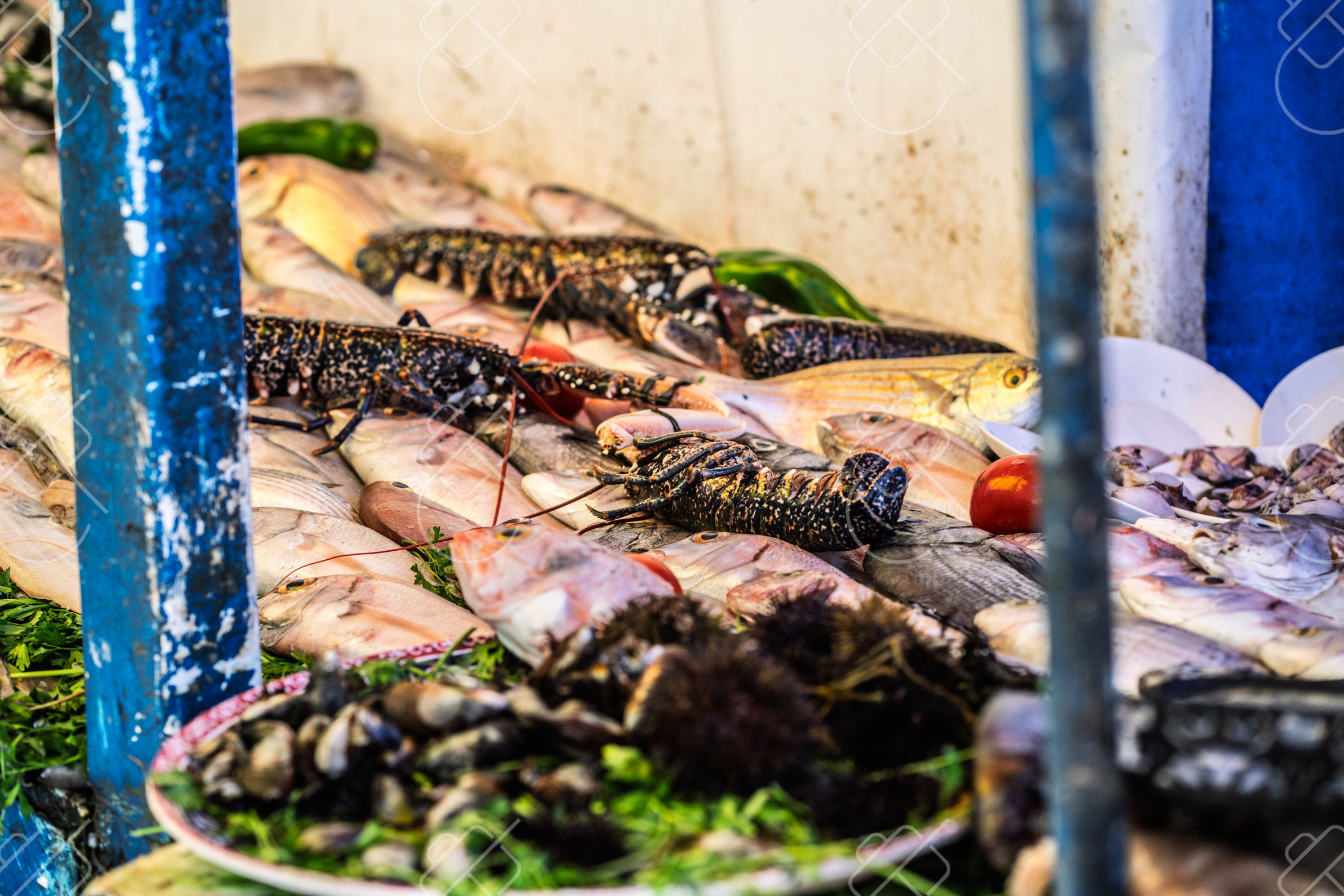
Essaouira Port & fish grills — Blue fishing boats, the morning catch auction and stalls that grill your chosen fish on the spot.
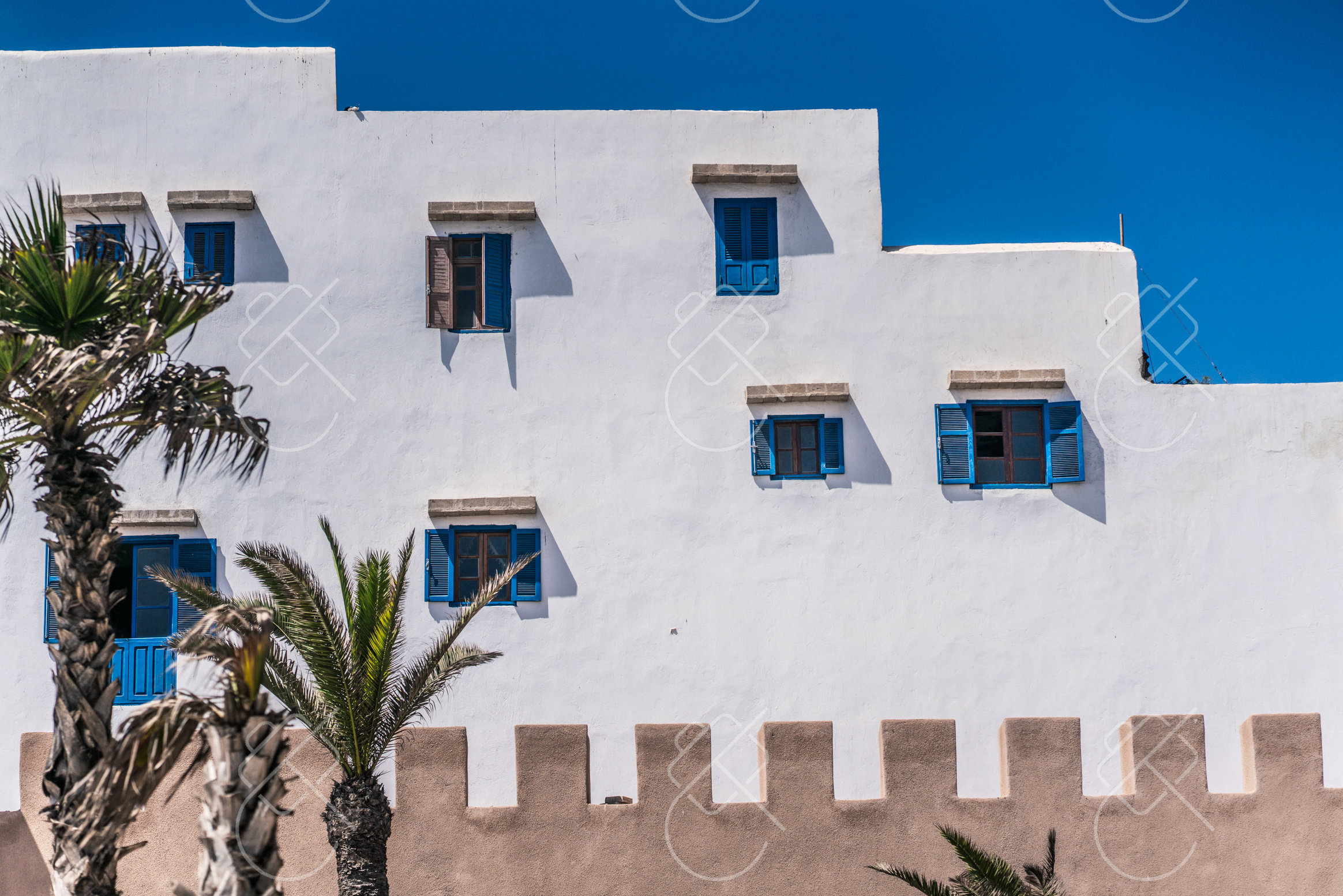
The Medina — UNESCO-listed grid of whitewashed lanes, blue shutters and souks, small enough to walk end to end in 15 minutes.
Skala du Port — The harbor fortress with a square tower and the best view back over the medina walls; small entry fee.
Thuya woodworkers' workshops — Marquetry studios built into the arches beneath the Skala de la Ville ramparts.
Essaouira Beach — A long sweep of sand south of the port, given over to kitesurfers and windsurfers when the trade wind blows.
Mellah — The former Jewish quarter in the medina's northwest, with the restored Slat Lkahal synagogue.
Place Moulay Hassan — The open square between the medina and the port, ringed with cafés for watching the gulls and the harbor traffic.
Diabat & Bordj El Berod — The ruined coastal fort south of town, reached on foot or by horse along the beach at low tide.
Sidi Kaouki — A surf village about 25 km south with a quieter beach and a whitewashed marabout shrine on the shore.
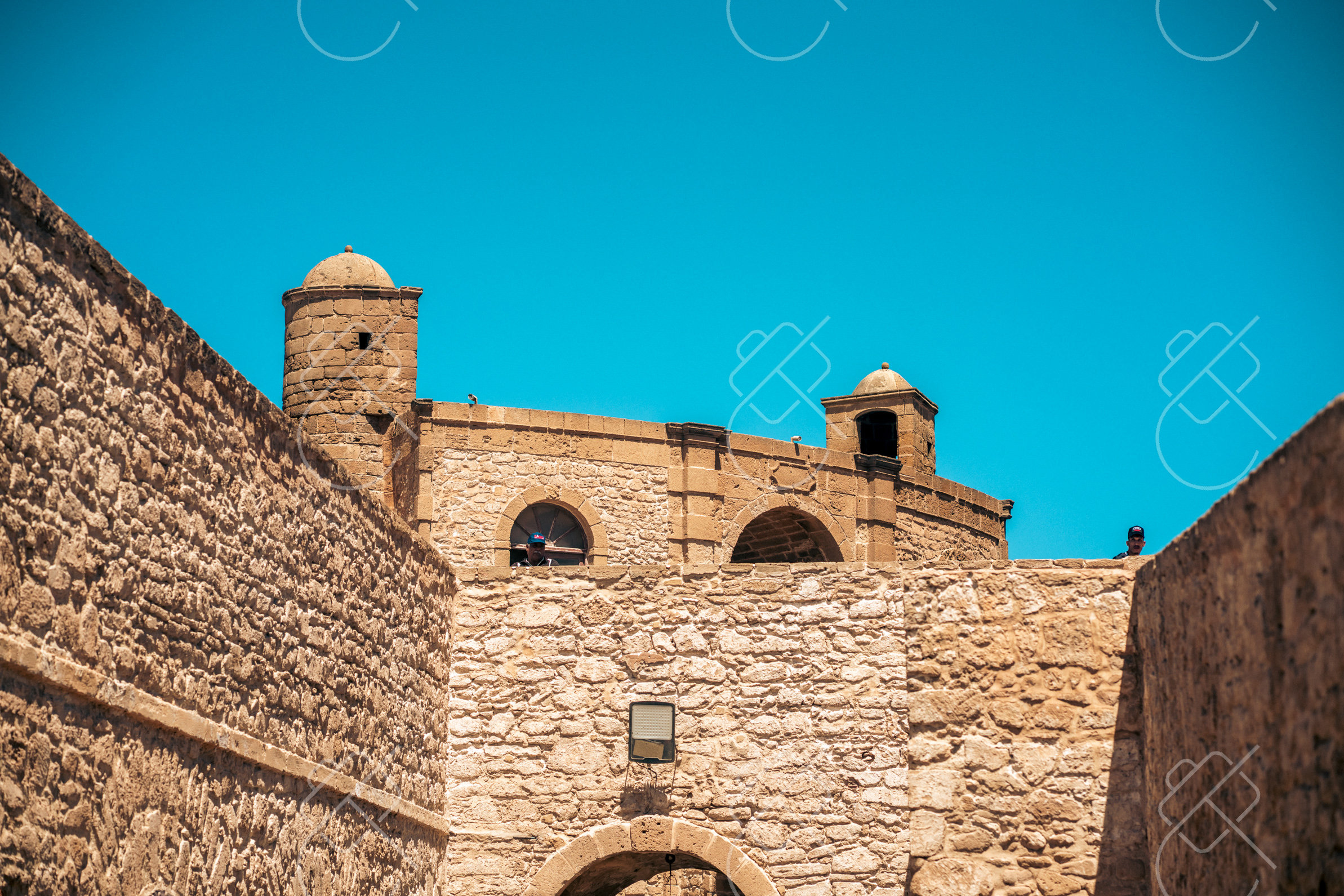
Essaouira is an Atlantic port town of whitewashed, blue-shuttered lanes inside 18th-century sea walls, known for its cannon-lined Skala ramparts, a working fishing harbor, thuya-wood crafts, and a cool, windy climate that sets it apart from Marrakech.
Essaouira's medina is unusual for Morocco: instead of a tangle, it is a near-grid of streets, because the town was planned from scratch in the 1760s by the French engineer Théodore Cornut for Sultan Mohammed ben Abdallah, who wanted a royal port to channel European trade. The Portuguese had held a fort here as Mogador in the 16th century, and the name stuck in European maps until independence. Enter through Bab Doukkala or Bab Marrakech and the main axis, Avenue Mohammed Zerktouni, runs straight down to the souks around the clock tower, where spice stalls, leather babouche sellers and fish and produce halls sit under tiled arcades. Turn off it and the lanes narrow between whitewashed walls with blue doors and shutters, carved stone doorframes and the odd sleeping cat. In the northwest corner, the Mellah was once home to one of Morocco's largest Jewish communities; the restored Slat Lkahal synagogue gives the clearest sense of what it was. The whole medina was inscribed by UNESCO in 2001.
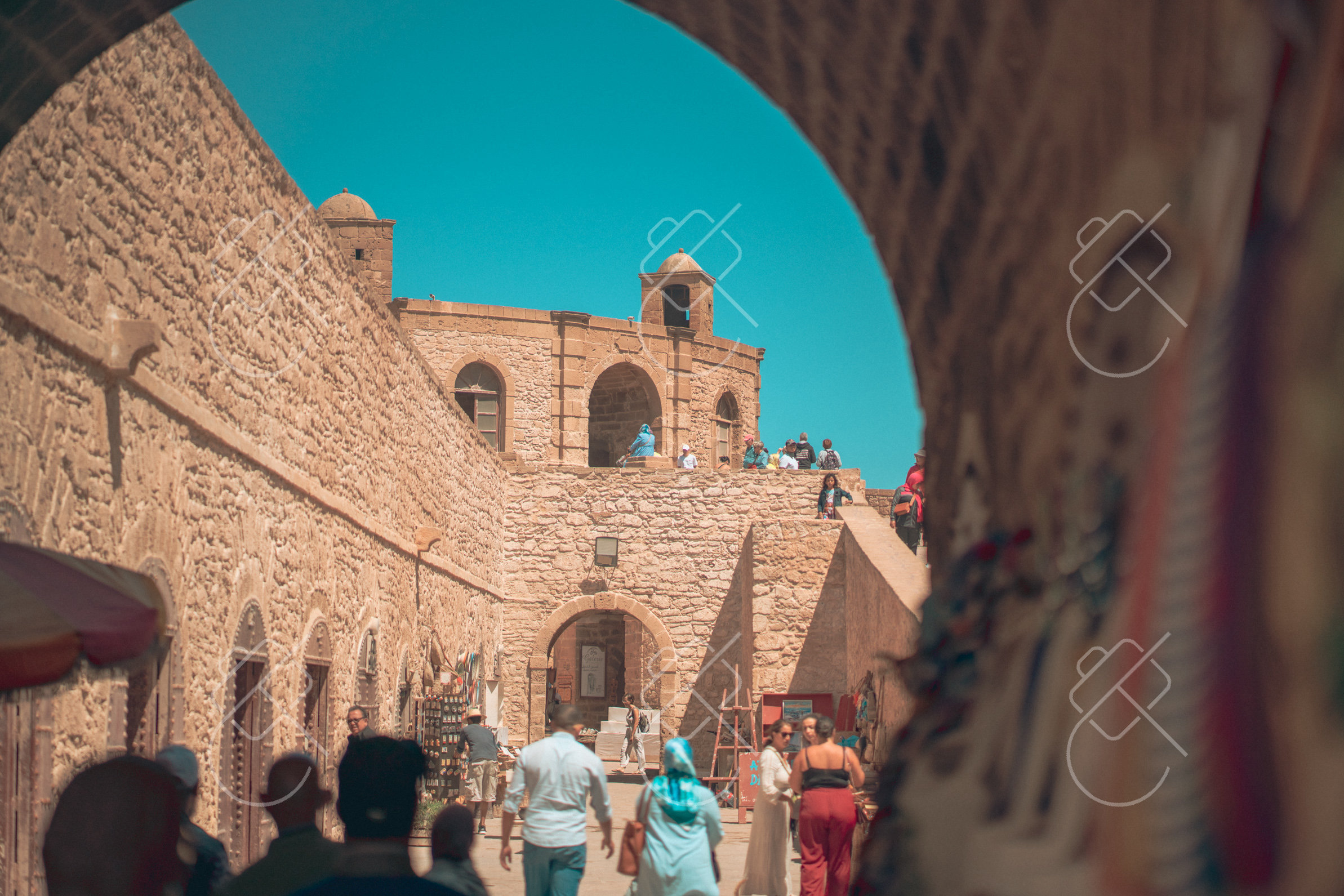
Visitors climbing toward the Skala de la Ville bastion, framed through a stone archway in the medina
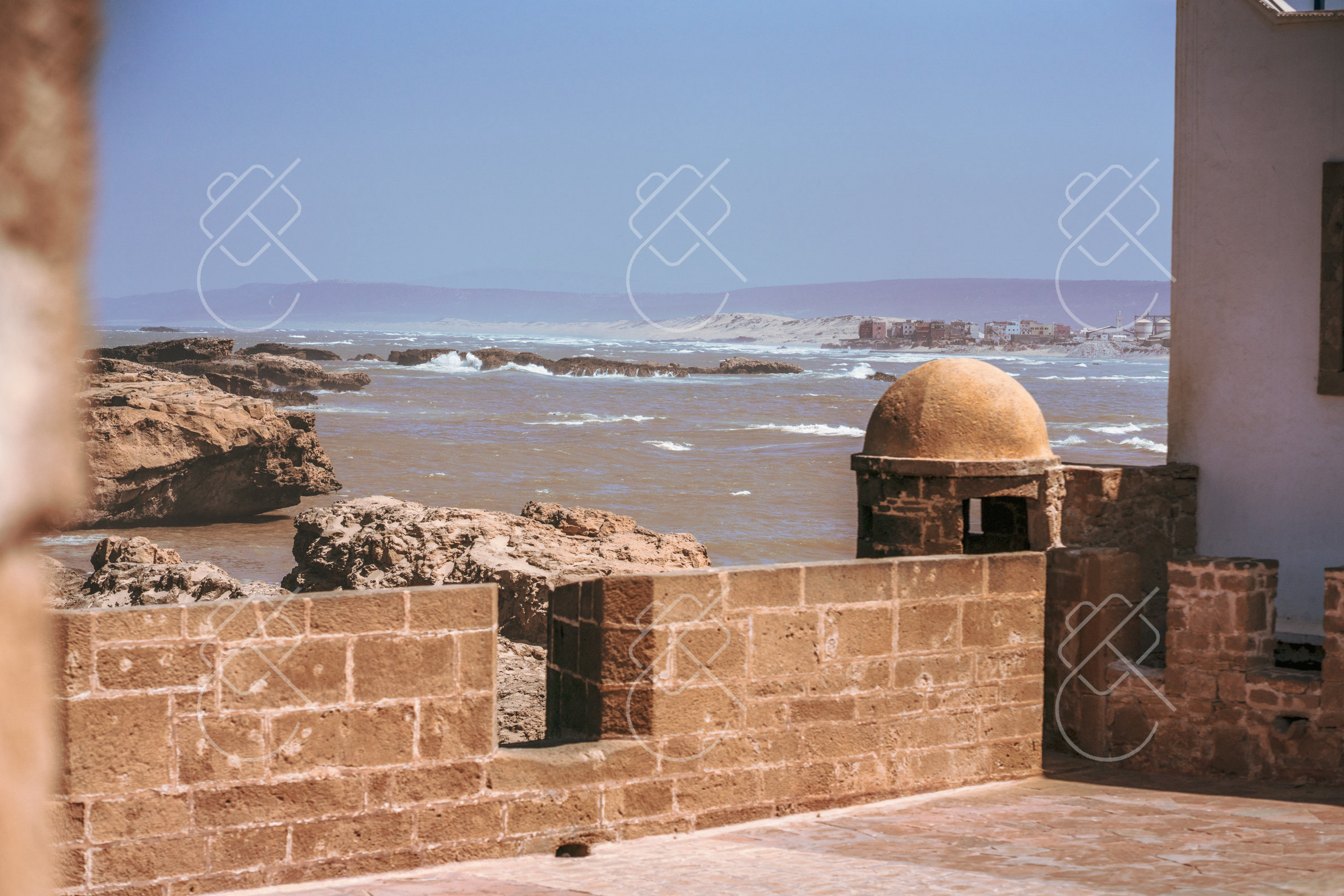
The sea defines everything else. Along the north wall, the Skala de la Ville is a raised gun platform about 200 meters long, lined with bronze cannon cast in Spain and the Netherlands and aimed out over the rocks and the surf, with the Mogador islands visible offshore. Orson Welles shot parts of his 1952 Othello here, and Game of Thrones used the ramparts as Astapor. Underneath it, thuya woodworkers carve and inlay boxes from the burl of a local conifer in workshops built into the arches. At the southern edge of the medina the port is still a working one: blue wooden boats unload sardines, sea bream and spider crab in the morning, gulls work the nets, and a row of stalls by Place Moulay Hassan will grill whatever you pick from the ice. Beyond the port, the beach runs several kilometers south, and from roughly April to September the steady alizé trade wind makes it one of Morocco's main kitesurfing spots. Watch the sun go down from the Skala, when the walls turn orange and the wind finally drops.
April to June and September to October give warm days, fewer crowds and slightly gentler wind; July and August are breezy and around 22-25°C, far cooler than Marrakech, but busy with Moroccan holidaymakers.
Stay in a riad inside the medina near the Skala de la Ville or Place Moulay Hassan, so the ramparts, the port and the souks are all within a five-minute walk.
Eat grilled sardines and sea bream from the port stalls by Place Moulay Hassan, agree the price per kilo before they cook, and try a fish tagine or a plate of Oualidia oysters in the medina.
Pack a windbreaker even in summer: the trade wind blows most afternoons, and the beach can be sandblasted while the medina lanes stay calm, so plan the beach for the morning and the walls for sunset.
A loose, walkable route — bend it to your pace and the light.
Enter at Bab Doukkala in the morning and walk the length of the medina along Avenue Mohammed Zerktouni into the souks, then cut north into the Mellah and the Slat Lkahal synagogue. Wander the side lanes for blue doors and carved doorframes before lunch at a medina café.
Spend the afternoon in the thuya workshops under the ramparts, then climb onto the Skala de la Ville as the light drops. Stay until sunset, when the walls turn orange and the wind finally drops, and eat dinner at a riad rooftop.
Where to shoot: Bab Doukkala gate · Blue doors in the side lanes · Cannon along the Skala de la Ville · Sunset over the Mogador islands
Tip: Bargaining is expected in the souks but gentler than in Marrakech; start at about half the asking price for thuya boxes and rugs.
Be at the port by 8am to watch the boats unload and the catch auctioned, then pay the small fee to climb the Skala du Port tower for the view back across the medina walls. Pick your lunch from the fish stalls by Place Moulay Hassan.
Walk the beach south in the afternoon, past the kitesurf schools, toward Diabat and the ruined Bordj El Berod fort, or book a horse or camel ride along the sand. Return along the beachfront promenade for a final mint tea on Place Moulay Hassan.
Where to shoot: Blue boats in the harbor · Medina walls from the Skala du Port · Gulls on the quay · Bordj El Berod at low tide
Tip: Confirm the per-kilo price at the fish stalls before they cook, and check the tide before walking to Diabat; the route is easiest at low tide.
With more time, spend a day in Sidi Kaouki for surfing and a quieter beach, or drive inland through the argan forest, stopping at a women's argan oil cooperative. Further up the coast, Oualidia's lagoon is famous for its oysters, and the road back to Marrakech takes about three hours, with the souks and gardens there for a final night.
Compare Essaouira hotels and get the best deals on Booking.com.
Transit cards, local customs, visa rules, and practical travel guides for this region.
See every destination from the 526-day journey:
Browse all destinationsCurious about the gear behind these photos? See the gear list.