
Home
About us
Destinations
Travel Guides
Recipes
Featured
Photos As Art
Abstract Prints
Locations
Travel Gear
Travel Resources
Favorites
Photo Framer
Explore Photos
ContactFew cities switch registers as fast as Seoul. A ten-minute walk carries you from a five-hundred-year-old palace gate to a canyon of LED billboards, from silent hanok courtyards to a night market roaring past midnight. That collision is the whole appeal, and it's what makes three days here feel less like sightseeing and more like channel-surfing a country. Get up for the palaces at opening, save the neon for after dark, and let the contrast do the work.
Published June 29, 2026 · Last updated
Tap any photo to open it full-screen and order a print.
Seoul is huge, but three focused days cover its range. Spend the first on the northern palaces and Bukchon's hanok lanes, the second climbing Namsan for the skyline and diving into Insadong and Hongdae after dark, and the third along the Han River and the contemporary city. Let the subway do the work — it's fast, cheap, and spotless — and lean into the contrast: solemn palaces by morning, neon and street food by night.
Seoul runs to extremes — muggy summers, bone-dry winters — so the two shoulder seasons do most of the heavy lifting. Autumn edges out spring for photographers, but both are worth planning a trip around.
Cherry blossoms sweep the city in early to mid-April — Yeouido, the palace grounds, and the stream banks go pink for a fortnight. Mild, bright, and busy; a lovely, if fleeting, window.
Hot, sticky, and monsoon-prone from July. Not the season for long walks, though a summer thunderstorm over the Han River is its own kind of shot. Shoot early and duck the afternoon downpours.
Clear skies, crisp air, and hillsides — Bukhansan, the palace maples — turning gold and red. This is the season the light is cleanest and the city photographs at its best.
Sharp, dry cold and thin crowds. Snow on Gyeongbokgung's tiled roofs against a grey sky is a classic Seoul frame — dress for it and the palaces are nearly yours.
Gyeongbokgung — The grandest Joseon palace, backed by mountains, with a changing-of-the-guard ceremony.
Bukchon Hanok Village — A hillside grid of tile-roofed houses where old Seoul survives among the towers.
N Seoul Tower (Namsan) — The city's summit viewpoint — where the grid of lights comes on at dusk.
Changdeokgung & the Secret Garden — The most serene palace, its rear garden visitable only by timed tour.
Gwangjang & Myeongdong markets — Street-food alleys and shopping crush at their best after dark.
Hongdae — The youth district of buskers, murals, and late-night energy.
Insadong — Traditional crafts, tea houses, and galleries in the old-town core.
Dongdaemun Design Plaza — Zaha Hadid's flowing silver landmark, floodlit and dramatic at night.
Han River parks — Wide riverside greens and lit bridges — where the city comes to breathe.
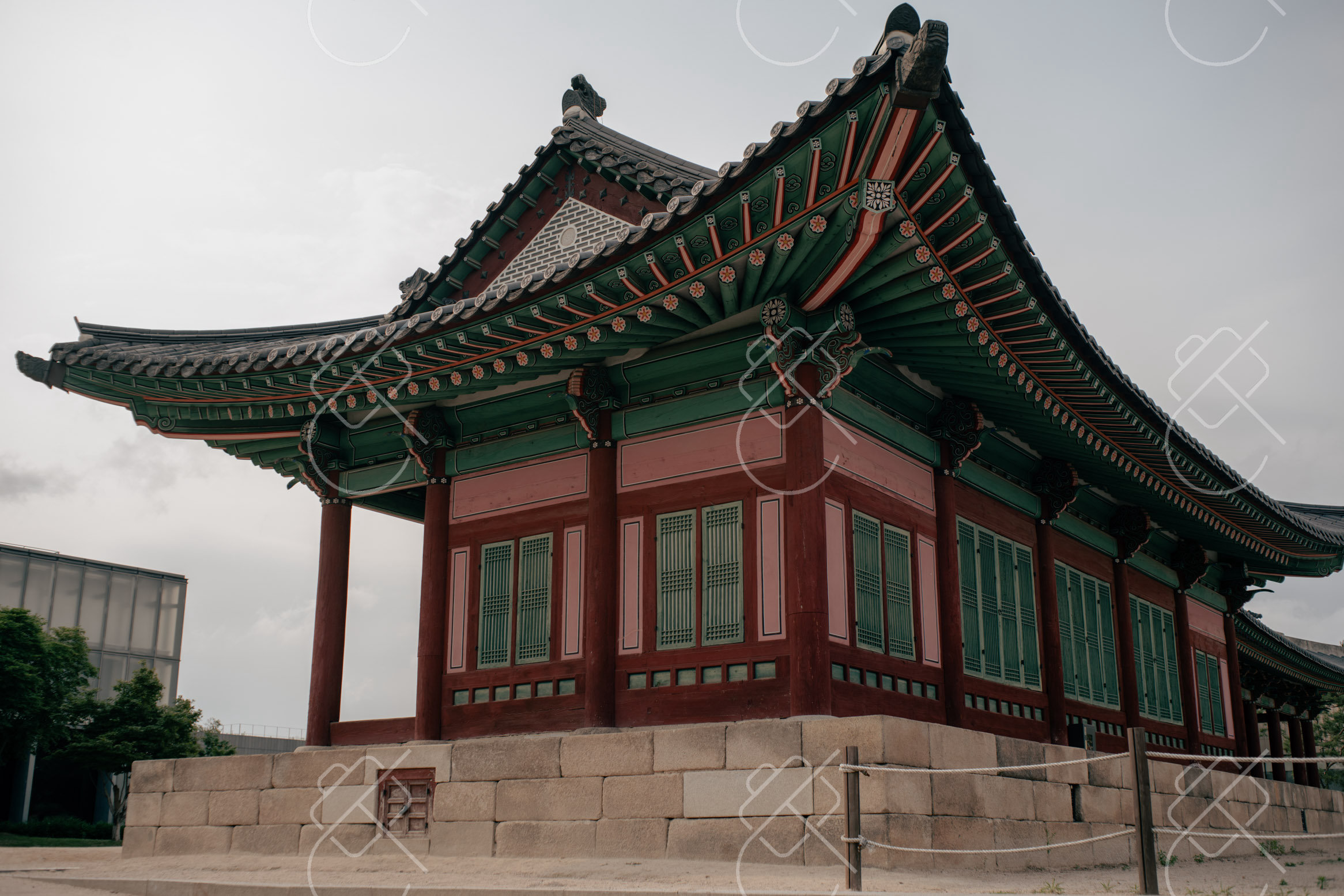
Seoul's historic core is a cluster of Joseon-era palaces backed by Bukhansan's granite ridges. Gyeongbokgung is the grandest, but the quieter Changdeokgung and its Secret Garden reward anyone willing to slow down.
Arrive for the 9am opening and walk the throne-hall courtyards before the tour flags go up. If you can, time the changing-of-the-guard ceremony at the main gate — colour, movement, and a backdrop of mountains all in one frame.
Renting a hanbok (traditional dress) gets you in free and puts wonderful colour into the courtyards; half the visitors around you will be doing the same.
9am opening, before the crowds and while the light still rakes across the courtyards. Autumn adds maples; a snowy winter morning is quieter still.
Base yourself around Jongno or Insadong to walk out into the palace district and Bukchon before the day fills up.
Grab a hotteok (sweet stuffed pancake) from a street cart, or a proper Korean set lunch in nearby Insadong.
Wearing a rented hanbok waives the entry fee at all four grand palaces — worth it for a day of colour and free admission both.
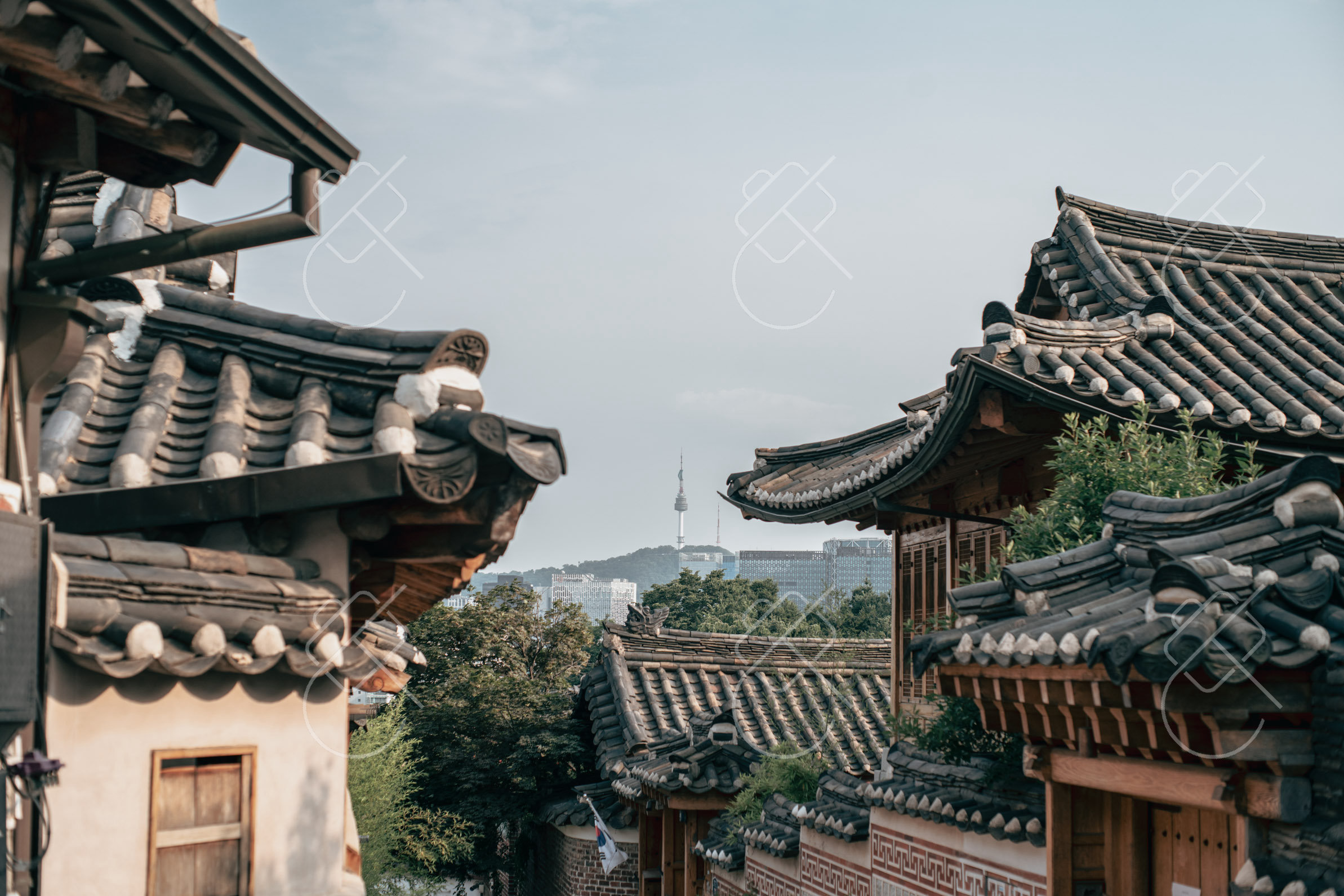
Between the palaces sits Bukchon Hanok Village, a hillside grid of tile-roofed houses where old Seoul survives at eye level. The lanes climb, and the higher you go the better the rooftops stack against the modern skyline beyond.
Bukchon is residential, so tread lightly — signs ask visitors to keep quiet before 10am, and it's a request worth honouring. Slide downhill into Samcheong-dong afterward for cafés, galleries, and a gentler pace.
The classic view looks down a stepped alley with hanok roofs in the foreground and glass towers behind — the whole of Seoul's story in a single frame.
Early morning for empty lanes and low light; the neighbourhood asks for quiet before 10am, which happens to be the best hour to shoot anyway.
Samcheong-dong is café country: sujebi (hand-torn noodle soup) is the local comfort dish, followed by coffee with a view.
The most-photographed alley is steep and narrow — a short telephoto compresses the roofs and towers together far better than a wide lens here.
A ten-minute walk carries you from a palace gate to a canyon of LED billboards.
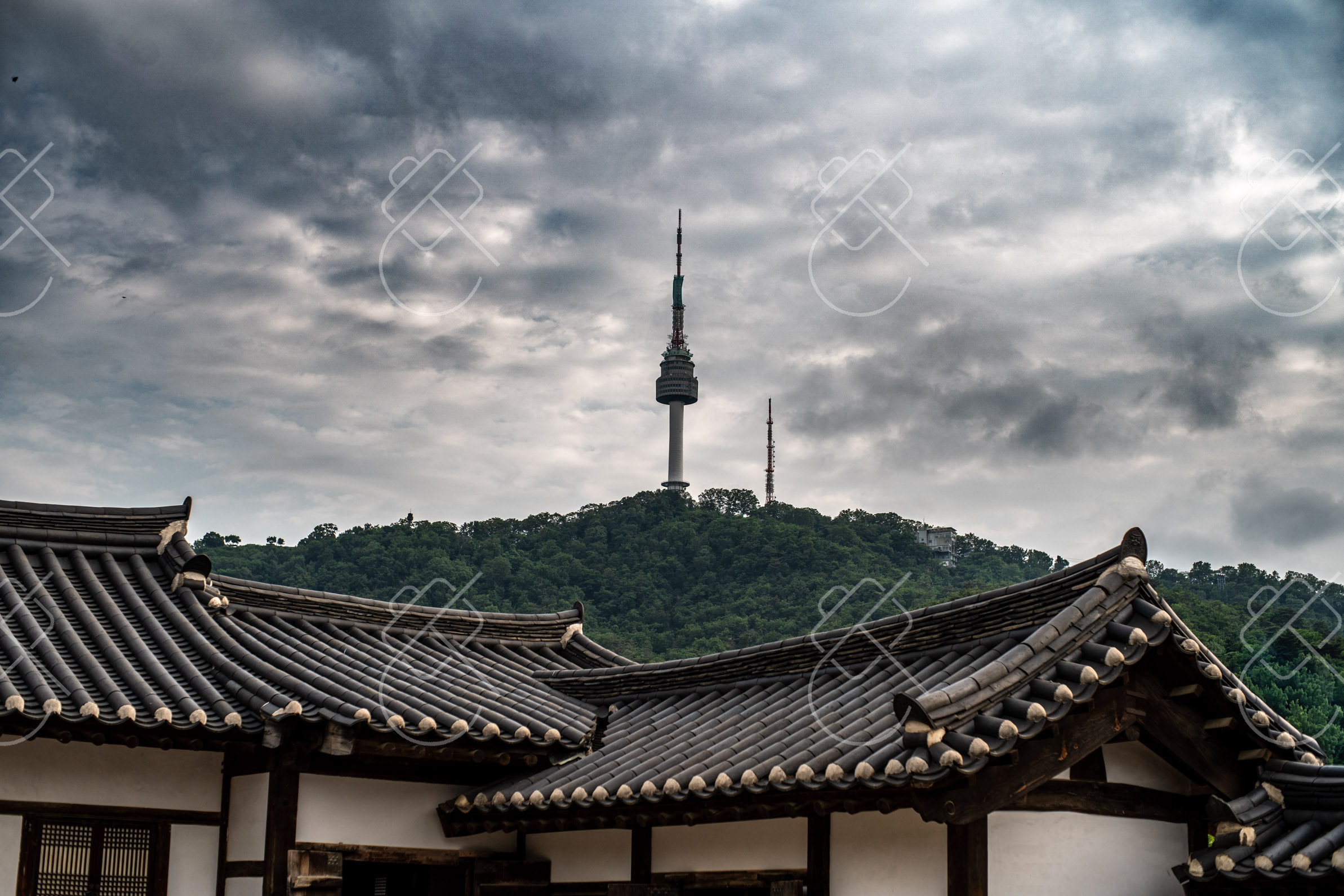
The forested cone of Namsan rises right out of central Seoul, and N Seoul Tower on its summit is the city's great vantage point — the place to watch the grid of lights switch on at dusk.
Ride the cable car or walk up through the park, and aim to be at the top for the half hour on either side of sunset, when the sky still holds colour and the city begins to glow. It's a 360-degree view; the western side catches the sunset, the eastern side the denser sea of lights.
Bring something long. The compression of a telephoto turns the endless apartment blocks into the layered, hazy cityscape Seoul is known for.
Blue hour — the thirty minutes after sunset — when the sky is deep blue and the lights are on but the city isn't yet a black silhouette.
Nothing beats grabbing Korean fried chicken and a beer afterward — the unofficial national pairing, and everywhere near the base of the mountain.
Go up before sunset to claim a west-facing spot; the good positions on the observation deck fill fast on clear evenings.
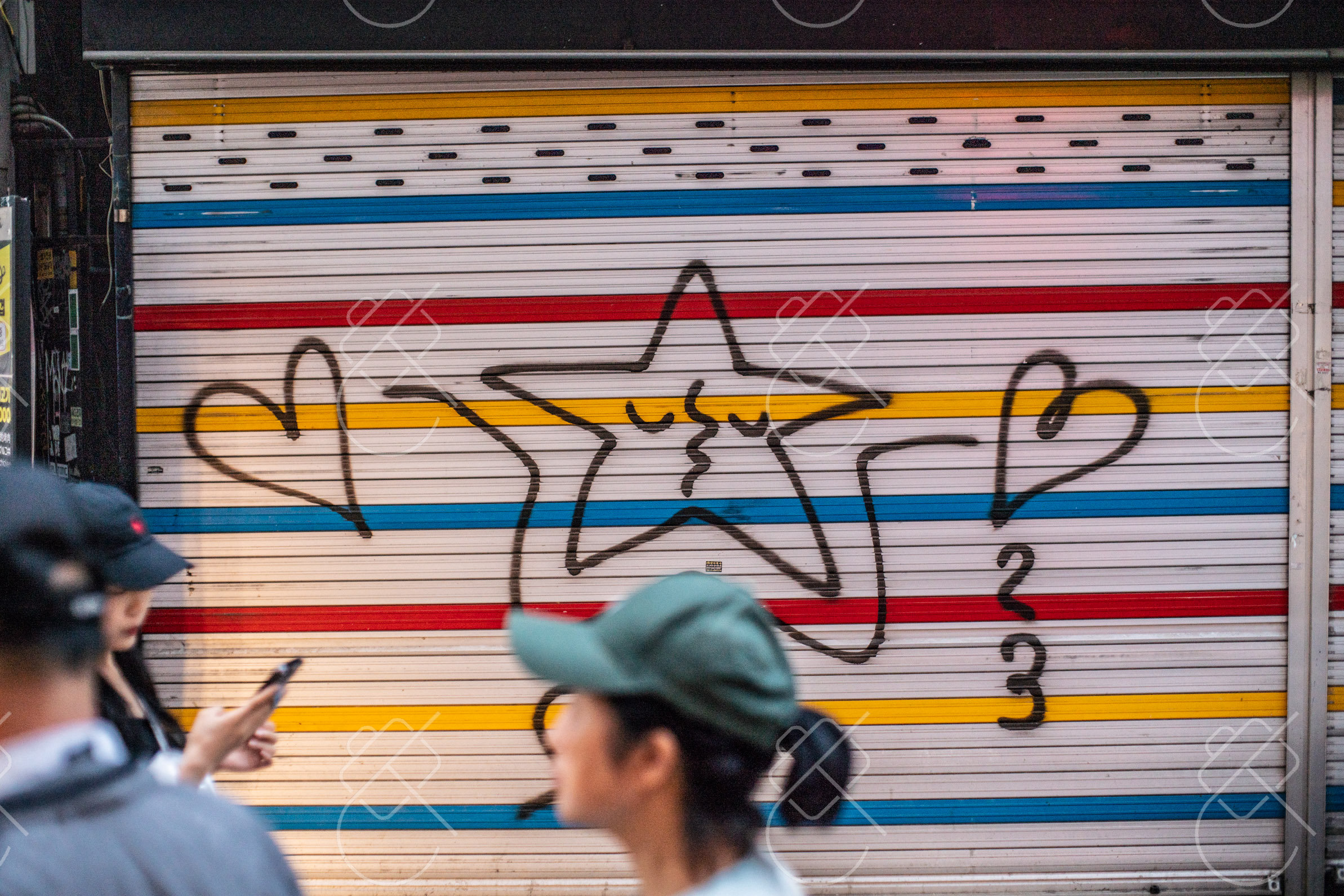
For the other Seoul — young, loud, and neon-lit — cross west to Hongdae's street performers and murals, or out to the Han River, whose parks and bridges are where the city comes to breathe.
Hongdae peaks after dark: buskers, food stalls, and light spilling from every doorway make it the most kinetic street photography in the city. When you need to exhale, the Han River parks are wide, calm, and threaded by illuminated bridges.
The Banpo Bridge's rainbow fountain runs on summer evenings, and the riverside is where locals picnic, cycle, and fly drones over the water at dusk.
After dark for Hongdae's energy and the lit bridges; late afternoon into dusk for the calmer riverside parks.
Hongdae is street-food central: tteokbokki (spicy rice cakes), gimbap, and skewers eaten standing up between the stalls.
Wet pavement is your friend here — stay out after a rain shower and the neon doubles in the reflections underfoot.
Come back after dark: this is a city that only shows half of itself in daylight.
A loose, walkable route — bend it to your pace and the light.
Open the day at Gyeongbokgung's 9am bell and walk the courtyards before the crowds thicken; catch the changing of the guard at the main gate if the timing lines up. From there it's a short walk uphill into Bukchon Hanok Village.
Wander the hanok lanes and the stepped alley view, then drift down into Samcheong-dong for lunch and coffee. Spend what's left of the afternoon at the quieter Changdeokgung and its Secret Garden.
Where to shoot: Gyeongbokgung throne hall at opening · Bukchon's stepped hanok alley · Changing of the guard, Gwanghwamun · Samcheong-dong's lanes
Tip: Buy a T-money card at any convenience store on arrival — Seoul's subway is fast, cheap, and the only sane way to cross the city.
Take a slow morning through Insadong's craft shops and tea houses, then make your way to Namsan in the afternoon — walk up through the park or ride the cable car, timing the summit for sunset and the lights coming on.
After dark, head west to Hongdae. Buskers, murals, and food stalls make it the city's most kinetic corner; eat as you go and shoot the neon off the wet streets.
Where to shoot: N Seoul Tower skyline at blue hour · Insadong tea houses · Hongdae buskers and murals · Neon reflections after dark
Tip: Namsan's western deck faces the sunset and fills first — get up there early and hold your spot through blue hour.
Give the last day to contemporary Seoul. Start at Dongdaemun's flowing DDP building, then spend the afternoon along the Han River — rent a bike, cross a footbridge, and watch the city slow down by the water.
Stay out for the illuminated bridges at dusk, and if it's a summer evening, time Banpo Bridge's rainbow fountain to close the trip.
Where to shoot: Dongdaemun Design Plaza's curves · Han River bridges at dusk · Cyclists and picnics on the riverbank · Banpo fountain (summer only)
Tip: The Han River parks are huge — pick one bridge and one park rather than trying to see the whole river; Yeouido and Banpo are the most photogenic.
With more days, the DMZ — the tense border with North Korea — is Seoul's most sobering day trip, bookable only through official tours. For something lighter, the fortress walls of Suwon and Korea's folk villages are a short train ride, and the palaces' spring and autumn night openings are worth building a whole evening around.
Explore regional routes with verified local fleets, zero hidden charges, and transparent insurance on Localrent.
Get the best deals on your Seoul flight before fares rise — Expedia.
Transit cards, local customs, visa rules, and practical travel guides for this region.
See every destination from the 526-day journey:
Browse all destinationsCurious about the gear behind these photos? See the gear list.