Every city we've walked through has had cats in it — sunning on doorsteps, working the docks, watching from window grilles — and the more character a street has, the more character its cats seem to have too. These are some of the best we met along the way.
Tap any photo to open it full-screen and order a print.
01 / 08
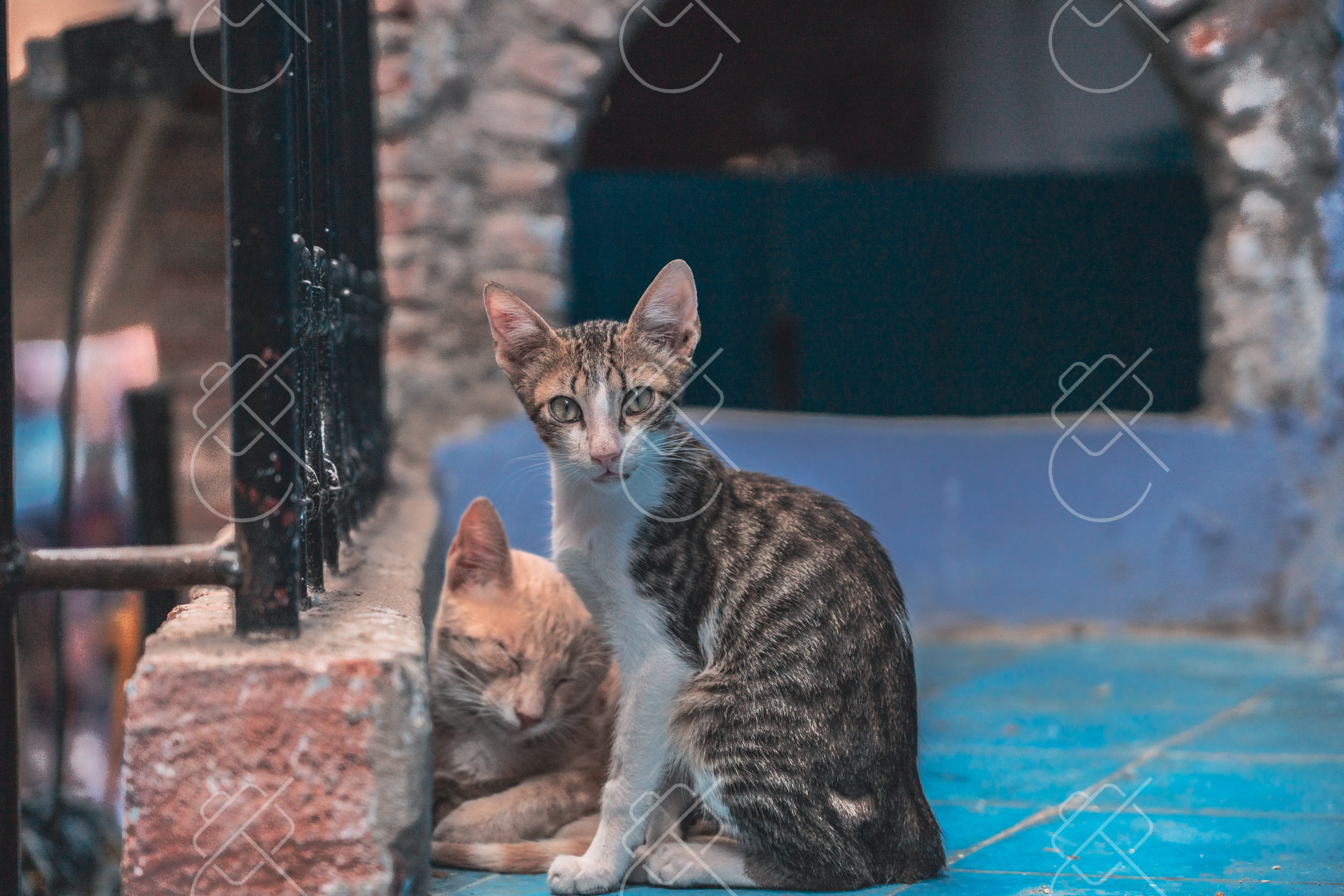
Chefchaouen, Morocco
Two kittens curl together against turquoise-washed stone in Chefchaouen's medina, one grooming the other beneath the blue city's namesake walls.
Cats are everywhere in Morocco's medinas, tolerated and often fed rather than shooed away — a habit rooted partly in Islamic tradition, which holds cats to be ritually clean animals. The custom traces back in part to Abu Hurairah, a companion of the Prophet Muhammad nicknamed "Father of the Kitten" for the cat he carried in his sleeve, and it's part of why strays roam Chefchaouen's alleys with a confidence dogs rarely get.
Explore Chefchaouen, Morocco →02 / 08
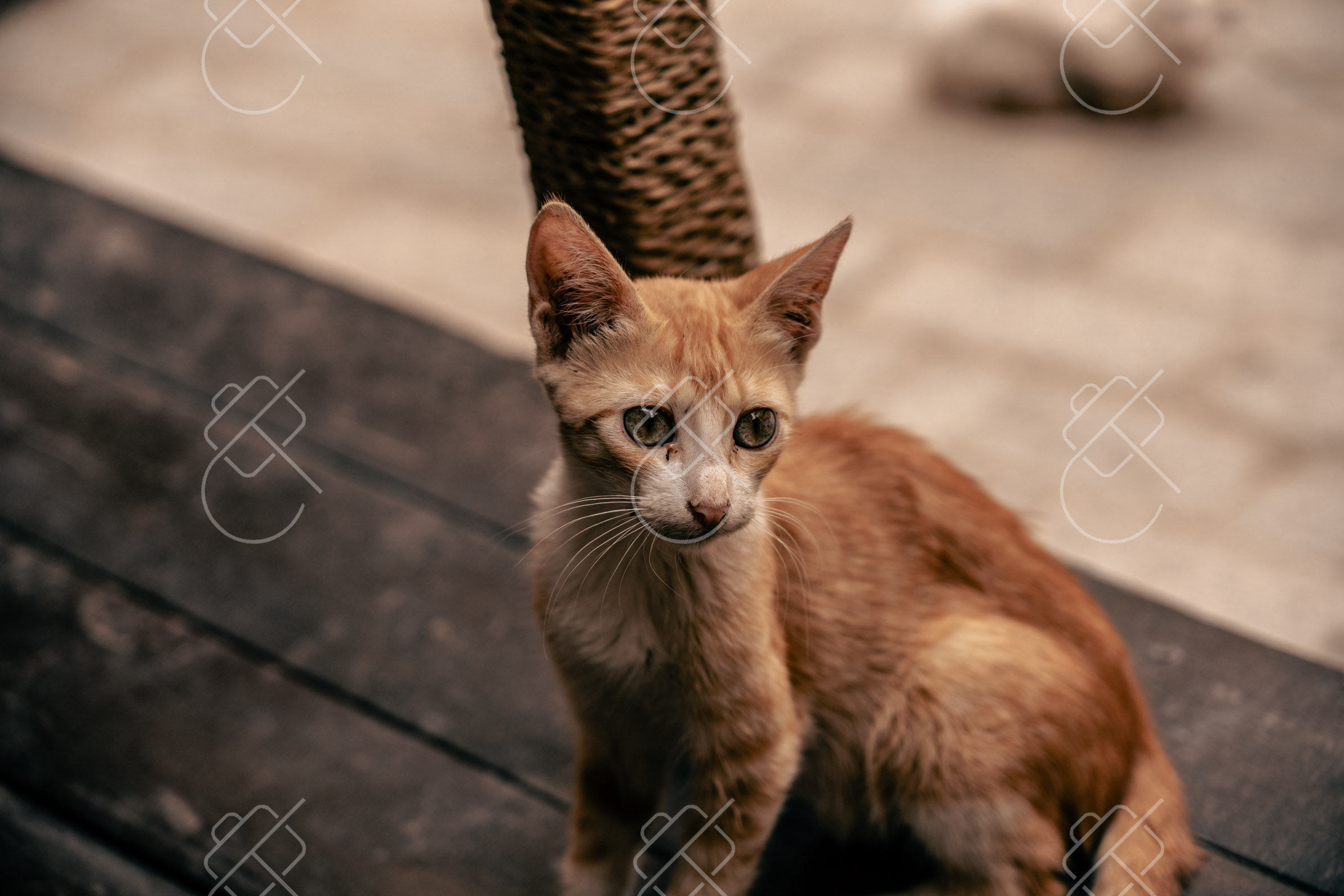
Fes, Morocco
A ginger kitten pauses mid-step in Fes el-Bali, ears forward, in what's often cited as the world's largest car-free urban area.
Fes el-Bali's medina has no cars and barely any streets wide enough for one — pack donkeys still haul goods through passages too narrow for anything else. Cats fill that gap as the medina's most visible animal, threading through leather tanneries, spice stalls and riad doorways largely undisturbed.
Explore Fes, Morocco →03 / 08
Rabat, Morocco
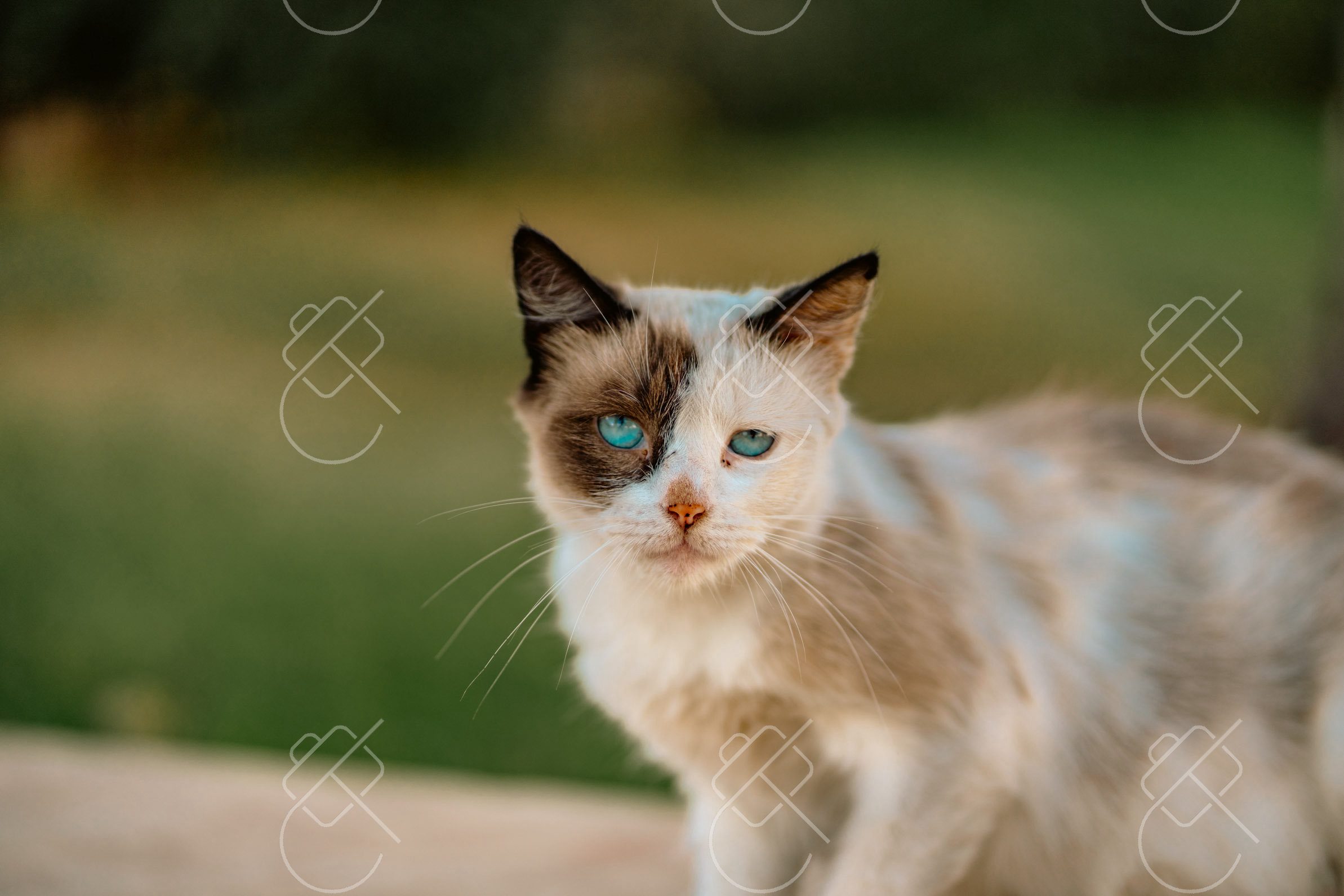
A cream-and-brown cat with startling blue eyes watches from a ledge near Rabat's kasbah.
Blue eyes like this are common in white or pointed cats, linked to the same gene that suppresses pigment in the coat — in fully white cats, that same gene is also associated with a higher rate of deafness, though plenty of blue-eyed cats hear just fine. Rabat, Morocco's political capital, keeps a quieter, more residential medina than Marrakech or Fes, and its cats are just as unbothered by passersby.
Explore Rabat, Morocco →04 / 08
Essaouira, Morocco
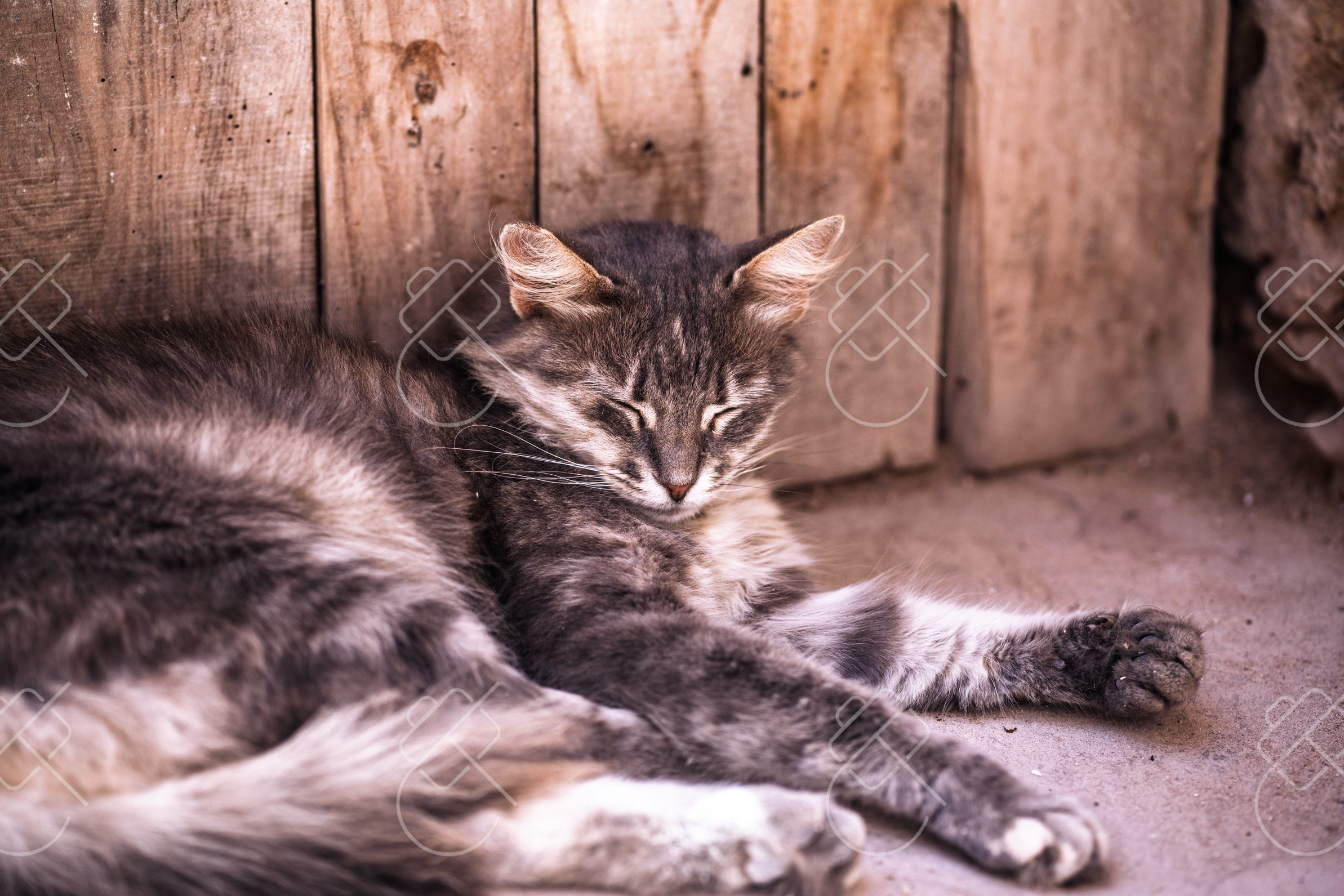
A tabby naps against a weathered wooden door in Essaouira, paws stretched out over sun-warmed stone.
Essaouira's fortified port has drawn fishing boats since the 18th century, and its cats have long earned their keep the old-fashioned way — working the docks and grain stores for rodents rather than living purely on handouts. The town's UNESCO-listed medina, later a filming location for Orson Welles's Othello, is quiet enough that most cats nap undisturbed for most of the day.
Explore Essaouira, Morocco →05 / 08
Istanbul, Turkey
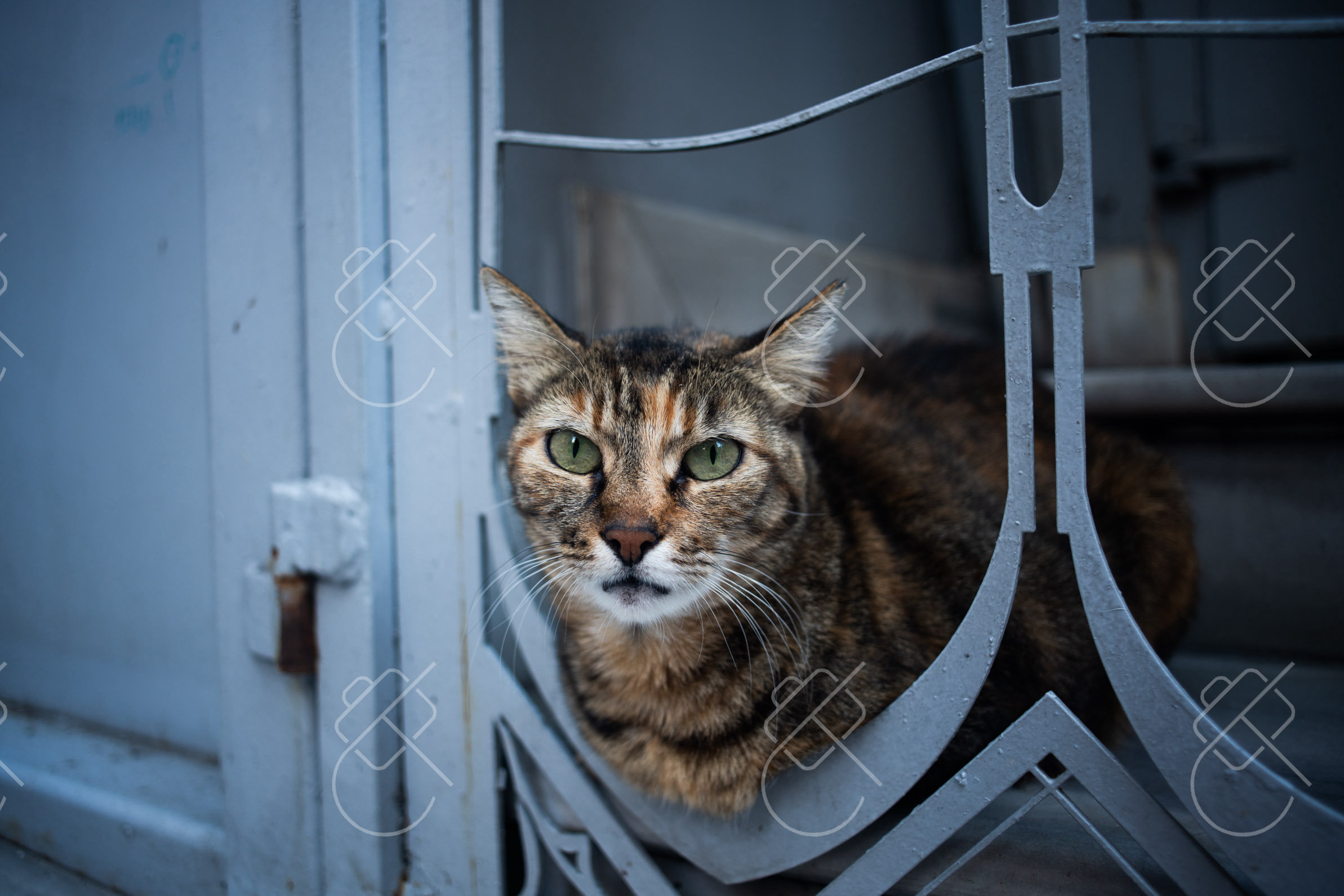
A tabby watches from behind a window grille in Istanbul, one of an estimated few hundred thousand cats living loose across the city.
Istanbul's street cats are famous enough to have their own 2016 documentary, Kedi, and their own beloved individual celebrities — Hagia Sophia's resident cat Gli lived inside the building for over a decade and was photographed being petted by Barack Obama in 2009. Ottoman-era tradition treated cats as useful, clean animals rather than pests, and that tolerance has carried straight through to the cats sunning themselves on doorsteps across the city today.
Explore Istanbul, Turkey →06 / 08
Ankara, Turkey
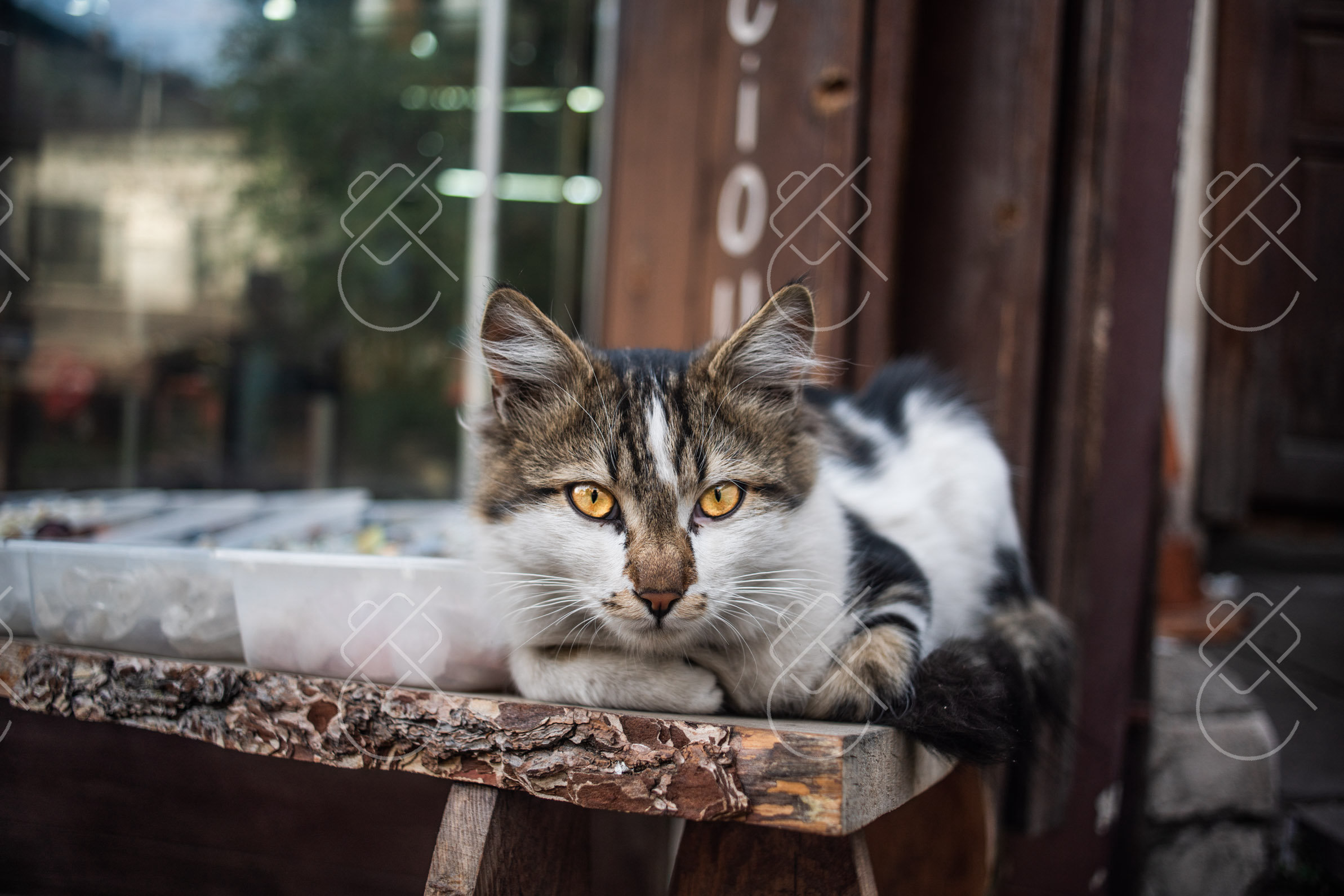
An amber-eyed cat rests its head on its paws atop a shopfront counter in Ankara.
Turkey's capital gave its name to one of the world's oldest recognized cat breeds, the Turkish Angora — a naturally long-haired white cat first recorded in the region and prized enough that Ankara Zoo still runs a dedicated breeding and conservation program for it today. Most of Ankara's street cats, this one included, are ordinary short-haired mixes, but the city's affection for cats runs centuries deep either way.
Explore Ankara, Turkey →07 / 08
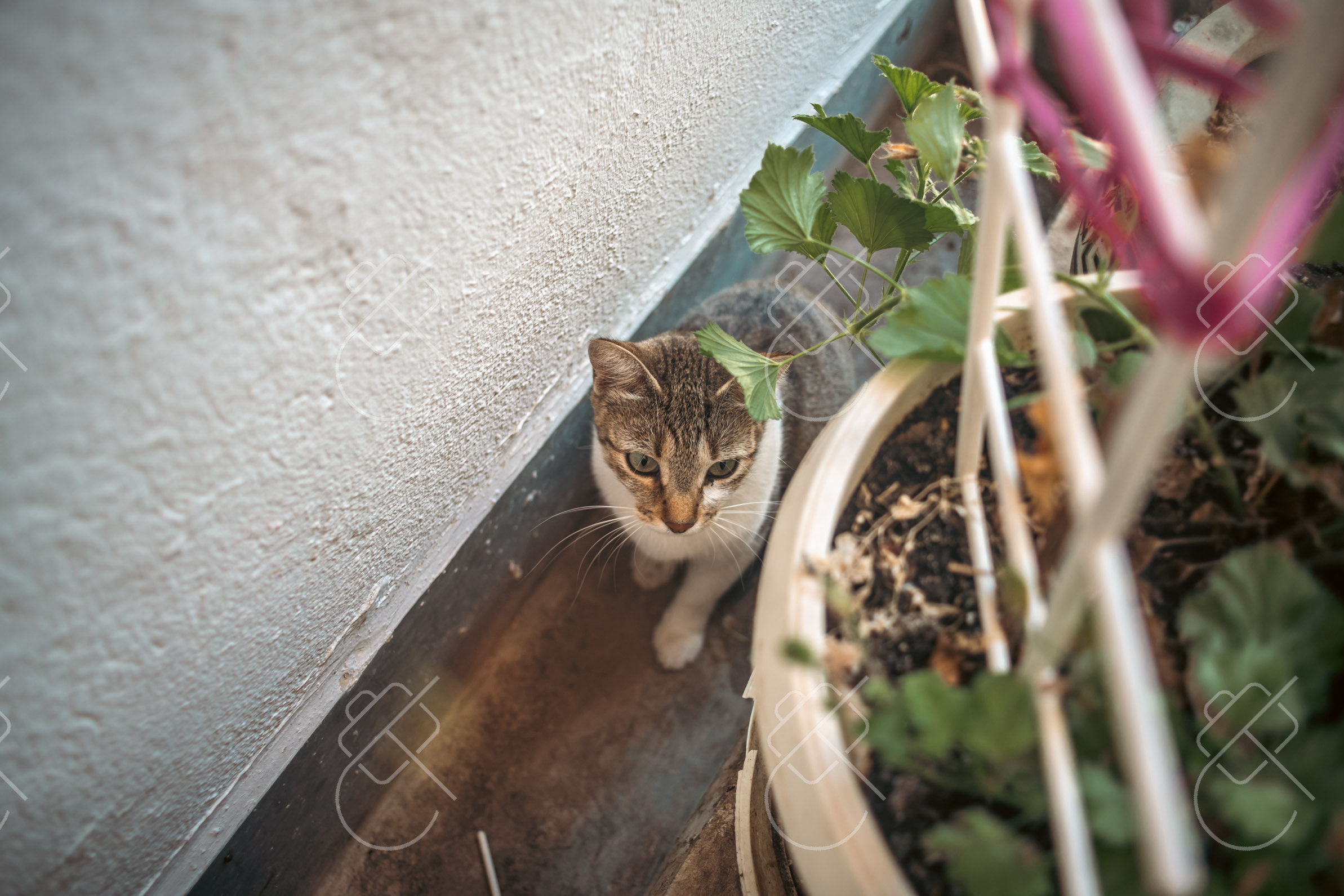
Stari Bar, Montenegro
A cat peers out from beside a planter in the ruins of Stari Bar, Montenegro's abandoned old fortified town.
Stari Bar has sat mostly empty since residents relocated down to the newer coastal town of Bar generations ago, after wars and earthquakes left much of the old hilltop settlement in ruins. What's left today is a quiet stone complex of Ottoman and Venetian-era walls, churches and hammams with almost no traffic and no permanent residents — exactly the kind of undisturbed territory feral cat colonies tend to take over.
Explore Stari Bar, Montenegro →08 / 08
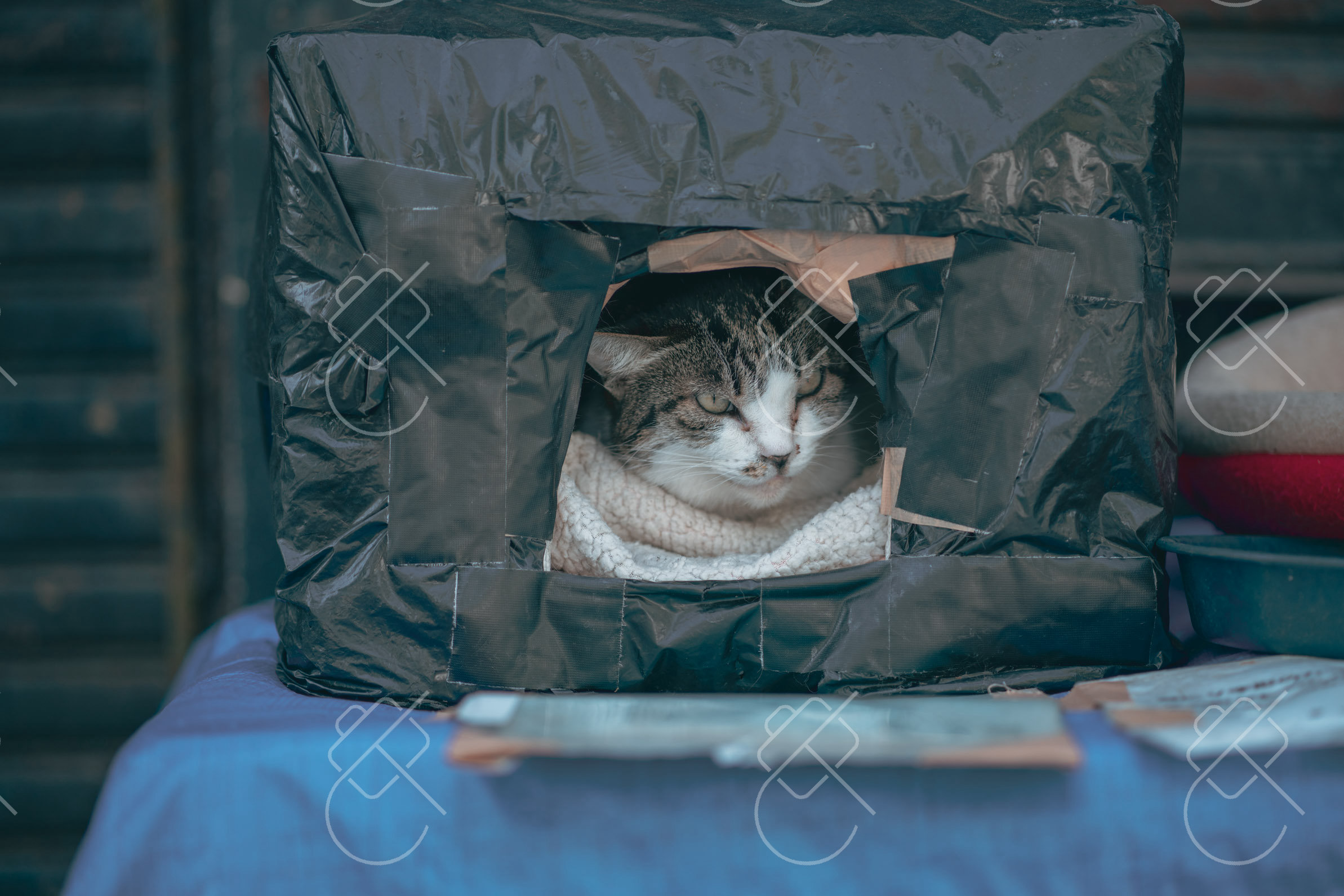
Himeji, Japan
A cat peers out from a makeshift cardboard shelter near Himeji, home to Japan's best-preserved original castle.
Community-fed outdoor cats are common across Japan, and neighbors often build small shelters like this one from boxes or plastic bins to keep strays dry and warm through the colder months. Japan's affection for cats runs deep culturally too — the beckoning maneki-neko figurine, now sold everywhere from temples to convenience stores, is said to have originated at Tokyo's Gotoku-ji temple, where a temple cat's raised paw supposedly beckoned a passing lord to shelter, saving him from a lightning strike.
Explore Himeji, Japan →