
Home
About us
Destinations
Travel Guides
Recipes
Featured
Photos As Art
Locations
Travel Gear
Travel Resources
Favorites
Photo Framer
Explore Photos
Contact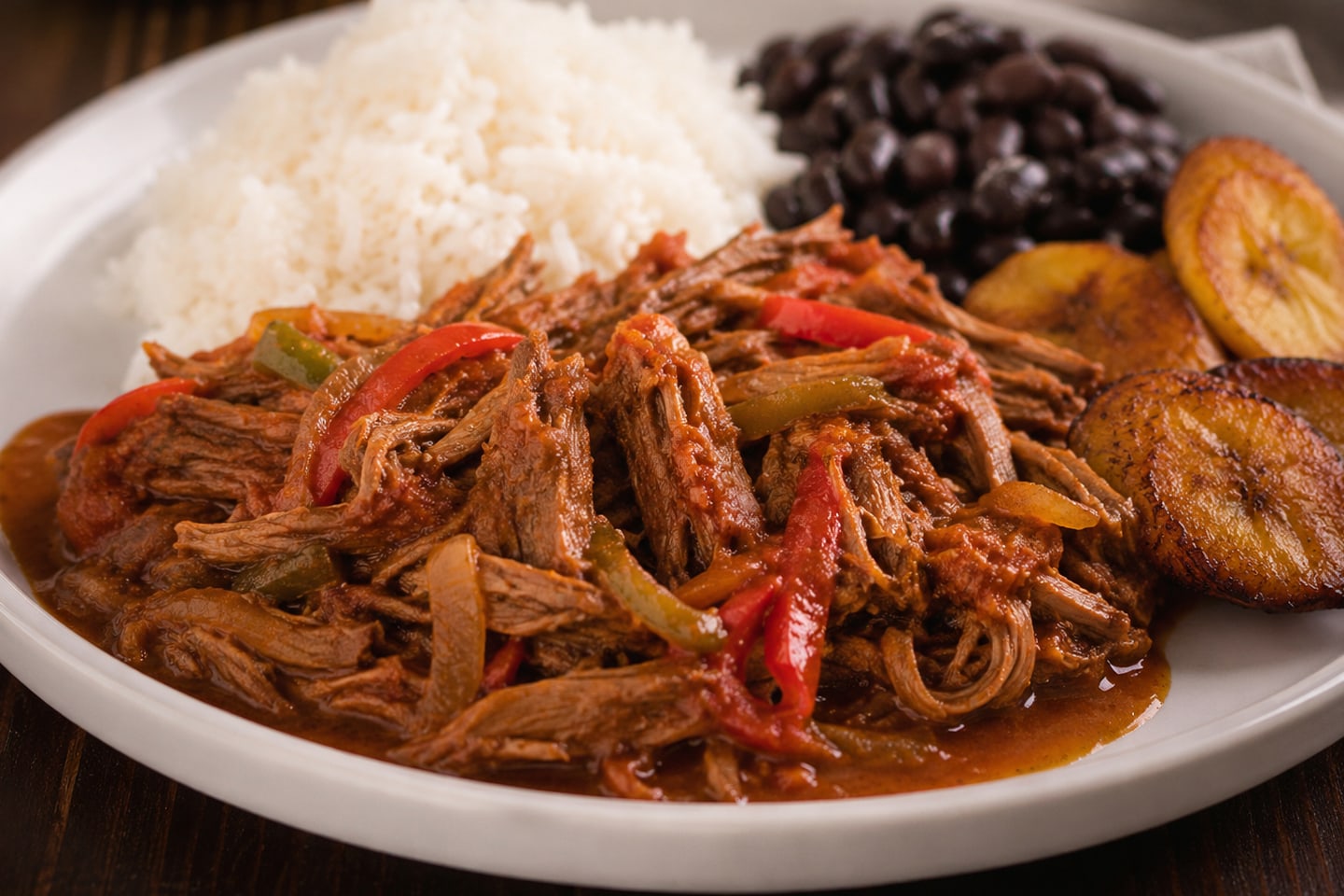
(Cuban slow-cooked shredded beef)
Ropa vieja means "old clothes" in Spanish, a nod to how the long-cooked, shredded beef looks like a heap of tattered rags once it is pulled apart. It is widely considered Cuba’s national dish, but its roots reach back across the Atlantic. Food historians trace it to the Spanish Canary Islands, and further still to the Sephardic Jewish communities of medieval Spain, who favored slow-cooked, make-ahead dishes that could rest through the Sabbath. A well-worn legend tells of a poor man who, with nothing to feed his family, shredded and stewed his own clothes; as he prayed over the pot, the rags are said to have turned to meat. Spanish settlers carried the dish to the Caribbean, where it picked up tomatoes, peppers, and briny olives and capers and became the version Cuba is known for today: a tough, inexpensive cut of beef simmered until it falls apart, then folded into a bright, garlicky sauce that cuts the richness.
Some ingredient links below are affiliate links — if you buy through them we may earn a small commission, at no extra cost to you.
clevertourists.comRopa vieja means "old clothes" in Spanish, a nod to how the long-cooked, shredded beef looks like a heap of tattered rags once it is pulled apart. It is widely considered Cuba’s national dish, but its roots reach back across the Atlantic. Food historians trace it to the Spanish Canary Islands, and further still to the Sephardic Jewish communities of medieval Spain, who favored slow-cooked, make-ahead dishes that could rest through the Sabbath. A well-worn legend tells of a poor man who, with nothing to feed his family, shredded and stewed his own clothes; as he prayed over the pot, the rags are said to have turned to meat. Spanish settlers carried the dish to the Caribbean, where it picked up tomatoes, peppers, and briny olives and capers and became the version Cuba is known for today: a tough, inexpensive cut of beef simmered until it falls apart, then folded into a bright, garlicky sauce that cuts the richness.
Be the first to comment.