Home
About us
Destinations
Travel Guides
Recipes
Featured
Photos As Art
Abstract Prints
Locations
Travel Gear
Travel Resources
Favorites
Photo Framer
Explore Photos
ContactThe road north out of Nikšić is the one most visitors to Montenegro never drive. It leaves the plain, climbs into a limestone country of shepherd huts and glacial tarns, threads a canyon above a reservoir the colour of antifreeze, and tops out on the highest paved pass in the country. It can be done in a long day from Nikšić, but the interesting parts are all on the sections where you'd want to stop.
Published September 8, 2026
Tap any photo to open it full-screen and order a print.
The route from Nikšić north to Piva Lake and over Sedlo Pass into Durmitor — tunnels cut through canyon walls, a 220-metre dam, and a high plateau of katun huts and limestone peaks.
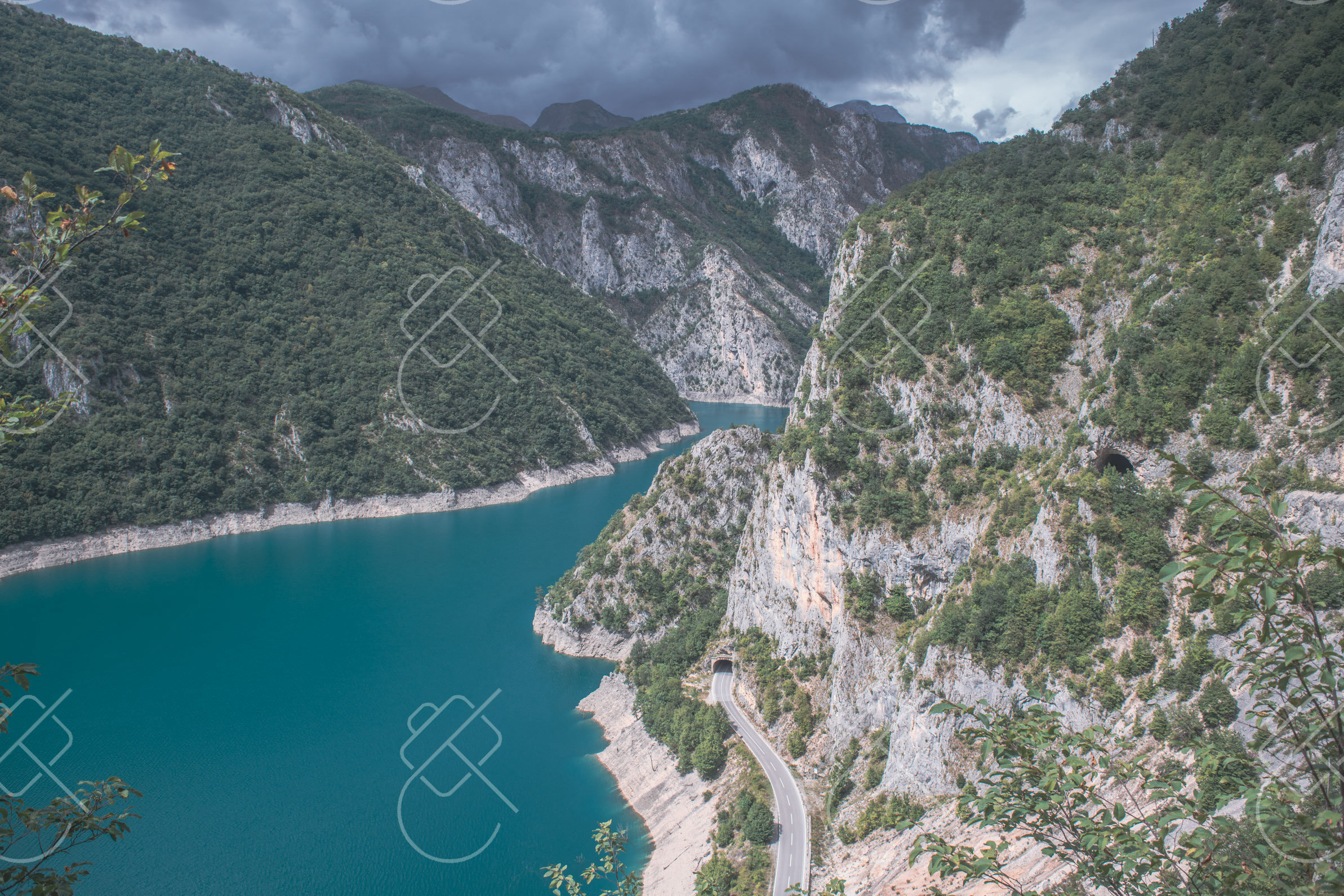
Plužine is about 65 kilometres northwest of Nikšić, and the last stretch of the approach is the reason to go: the road runs along the wall of the Piva canyon, ducking through dozens of short unlit tunnels blasted straight into the rock, with the reservoir far below on your left. Piva Lake is artificial — the Mratinje Dam, a 220-metre concrete arch built between 1971 and 1976, flooded 45 kilometres of the Piva river valley to a maximum depth of 188 metres. The old town of Plužine is on the bottom of it. The Piva Monastery, with 16th-century frescoes, was cut from its original site and moved 3.5 kilometres uphill in a salvage operation that ran from 1969 to 1982, and the seams where the stone was reassembled are still visible inside. The water is an implausible turquoise, and there is nowhere on this road with a railing where you won't want to pull over.
The tunnel-riddled road along the Piva canyon above the turquoise reservoir
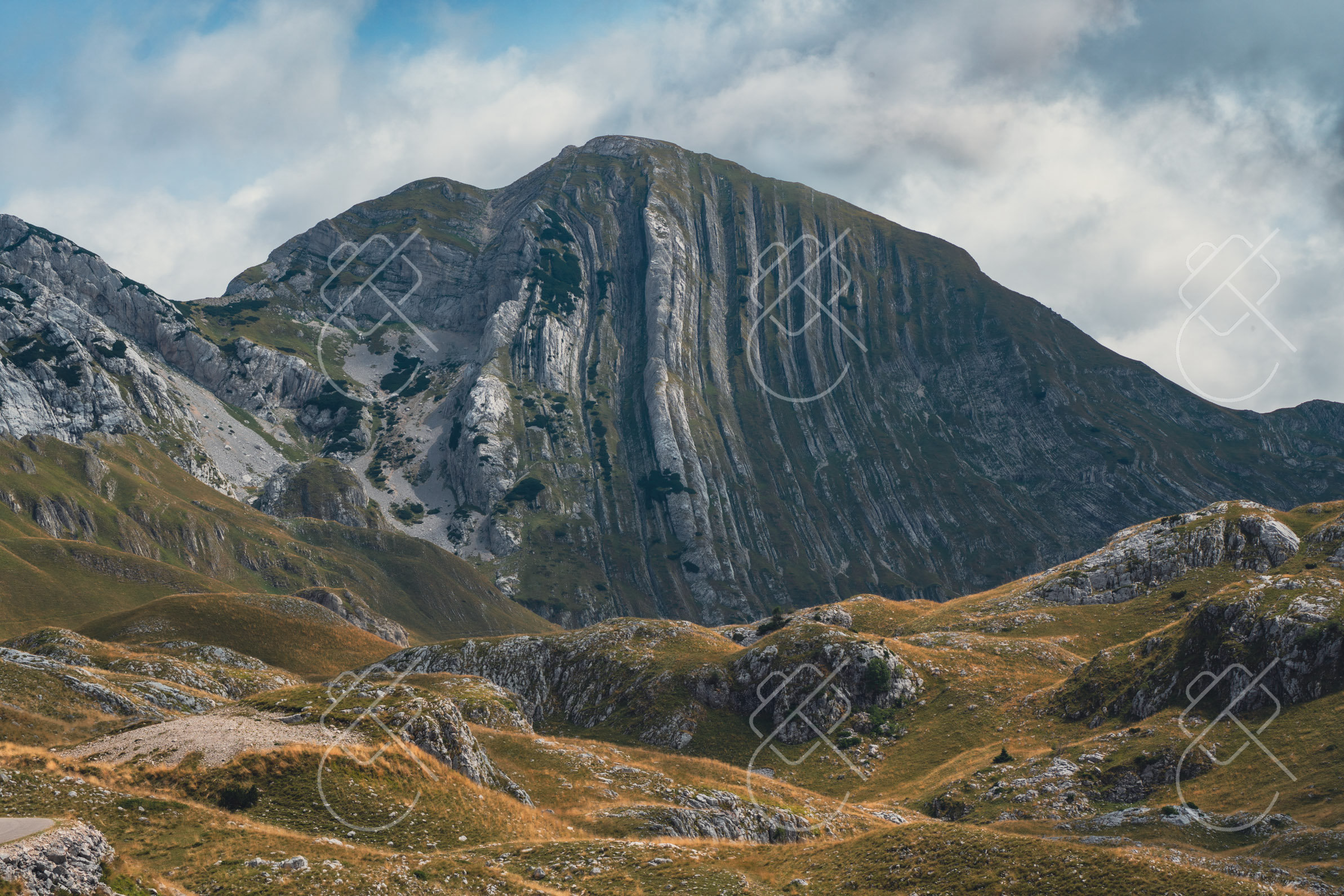
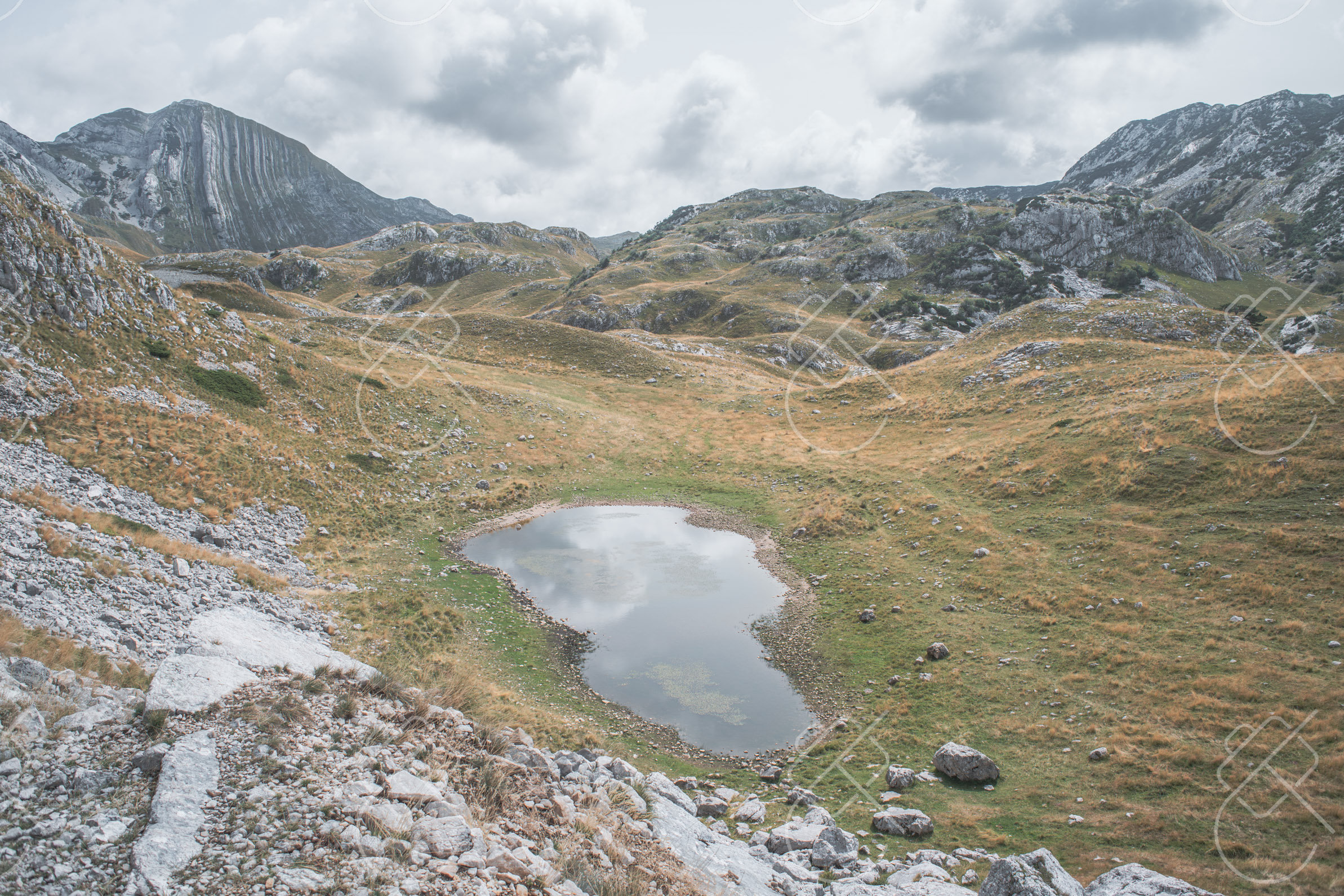
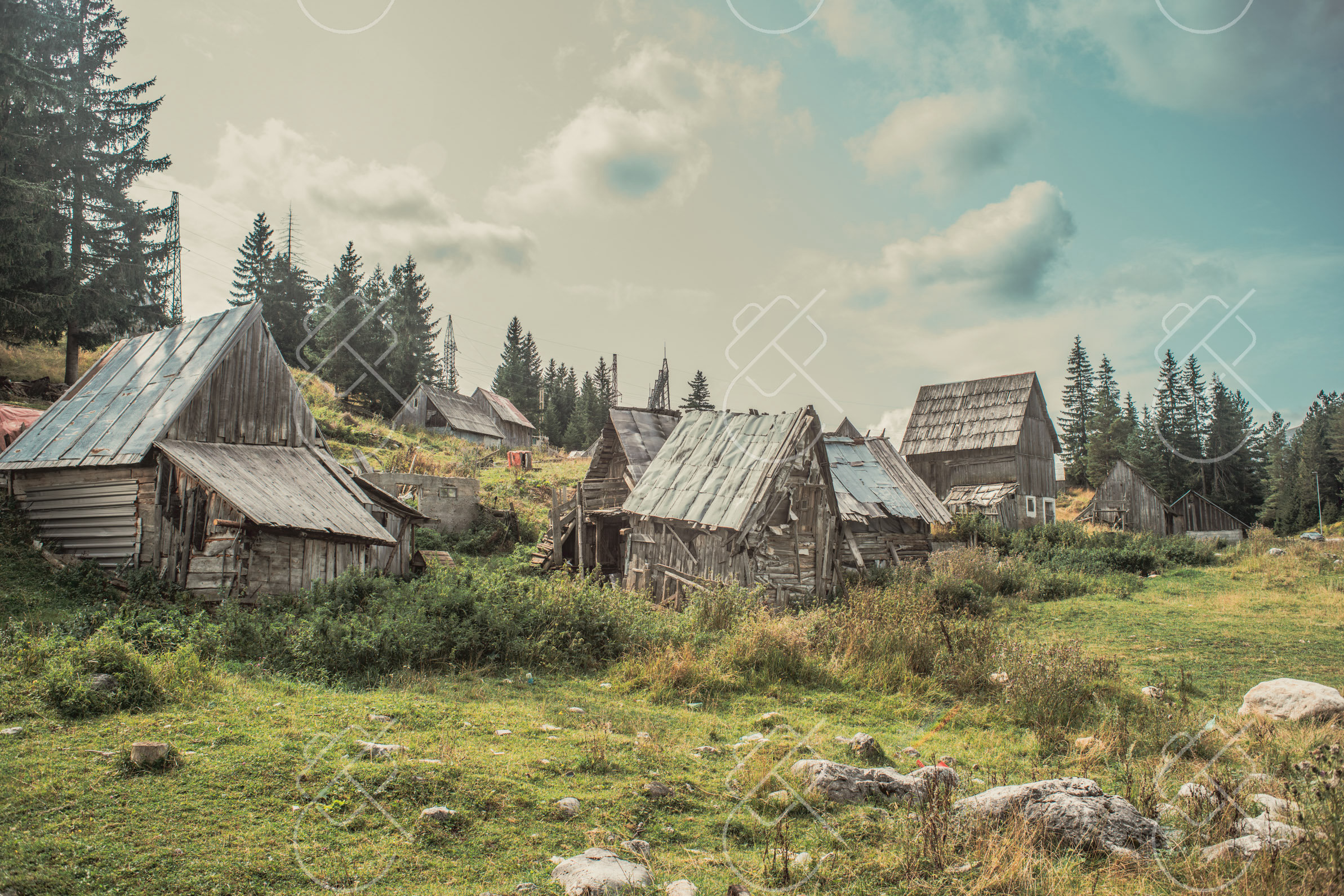
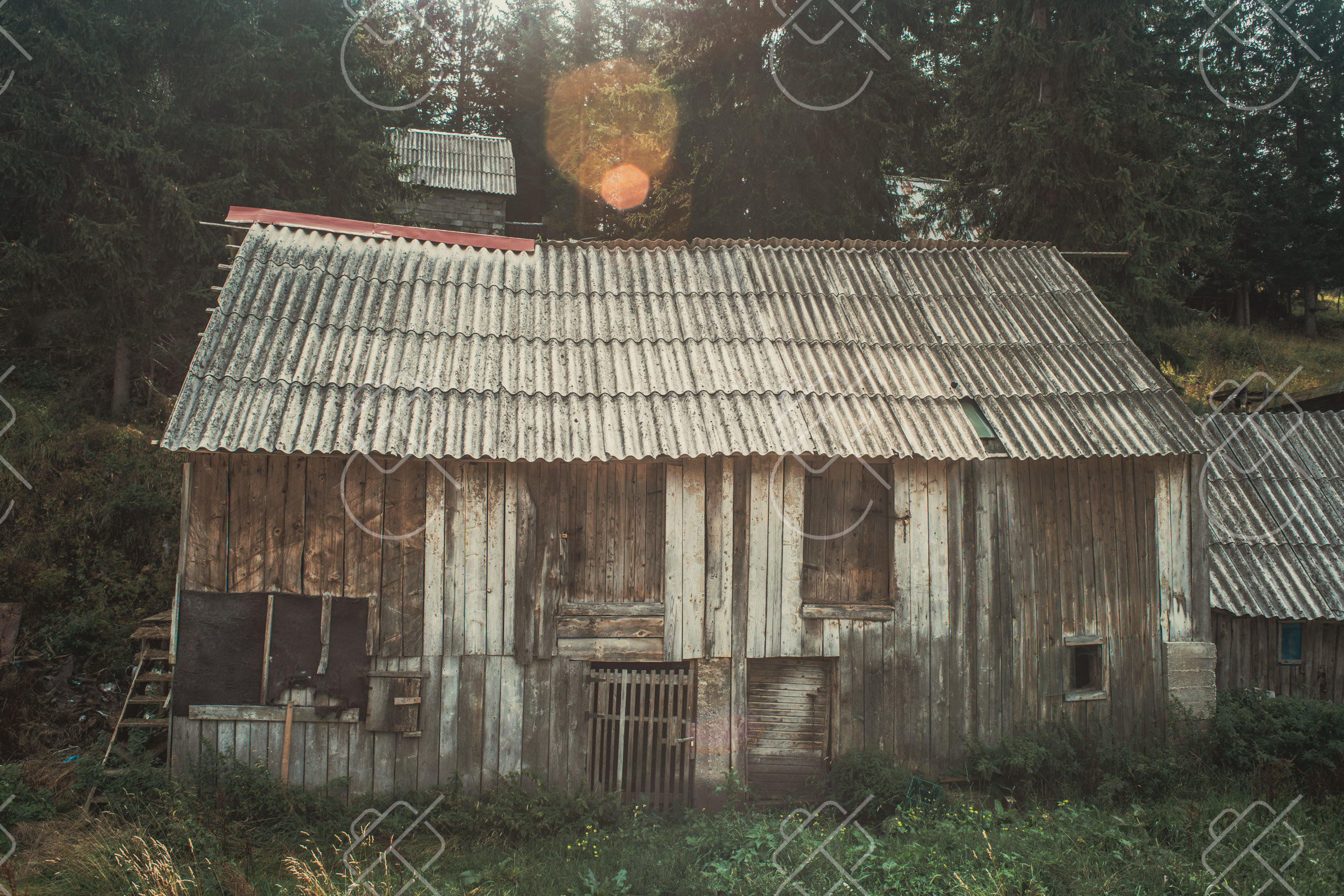
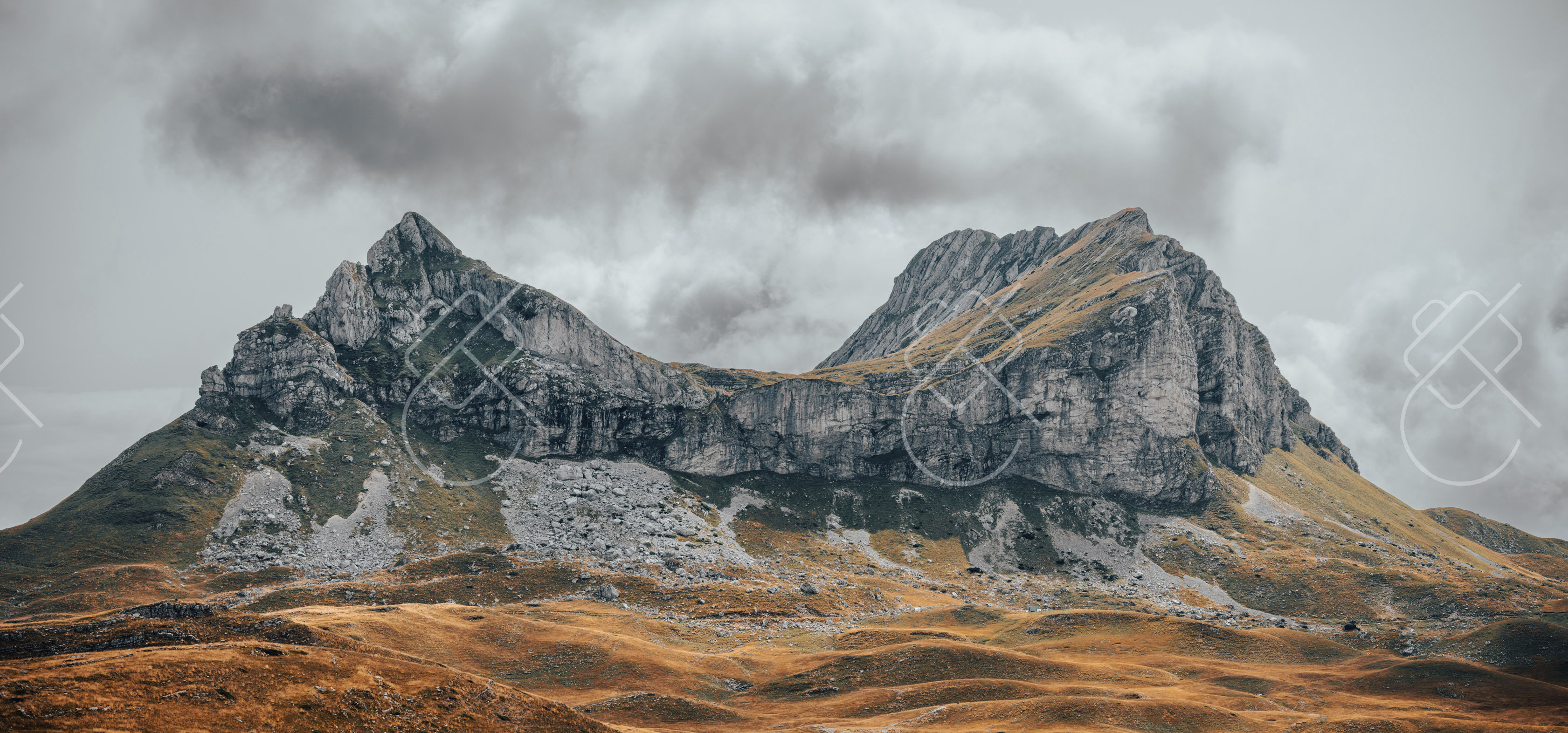
From Plužine the P14 climbs east toward Žabljak, roughly 50 kilometres of narrow two-lane road that is regularly down to one lane in practice — meet an oncoming car on a blind corner and one of you reverses. It crosses Sedlo Pass at 1,907 metres, the highest paved road in Montenegro, and the plateau on either side is the best of the drive: bare golden grass over limestone, shallow glacial tarns, and the striped grey face of Prutaš, whose near-vertical rock striations look like something raked down the mountainside. Scattered through the pastures are katuns, the timber shepherd huts still used for summer grazing, some in clusters of five or six with sheet-metal roofs and no road access. The pass is normally open from May to October and can hold snow into mid-June; there is no fuel between Plužine and Žabljak, and long stretches with no phone signal at all.
June through September. Sedlo can stay under snow into mid-June after a heavy winter, and the plateau grass turns gold from late August, which is when the light up there is best.
Use Nikšić as a base if you're driving the route as a day loop; stay in Plužine or Žabljak if you want to be on the plateau for morning light.
Stop in Plužine for fresh trout from the lake, or buy smoked cheese and kajmak from a roadside stand on the plateau, sold by the same families who keep the katuns.
Fill the tank in Nikšić and again in Plužine or Žabljak — there is no fuel on the pass, the tunnels are unlit and narrow enough that headlights on is not optional, and a hire car with a small engine will struggle on the sustained climbs.
Explore regional routes with verified local fleets, zero hidden charges, and transparent insurance on Localrent.
Get the best deals on flights, hotels, and stays for Nikšić — all on Expedia.
Transit cards, local customs, visa rules, and practical travel guides for this region.
See every destination from the 526-day journey:
Browse all destinationsCurious about the gear behind these photos? See the gear list.